IA
Maximizing ROI with Enterprise Automation Tools
A practical framework for turning automation investment into measurable business value.
October 2, 2026Leer Resumen
HyperCode
Technology Consulting

How enterprise AI companies move beyond models to build connected, intelligent systems
Enterprise AI companies are moving beyond models. The organizations creating measurable business value are the ones building intelligent, connected systems: AI that works with enterprise data, follows rules, fits existing technology and produces an outcome that matters to the business.
This guide explains what makes an enterprise AI system intelligent, where enterprise AI companies create value, how to decide whether to build, buy or partner, and what it takes to move from an AI pilot to a production system that keeps working.
Animated overview
The Intelligent System Lifecycle

Intelligent
system
Each cycle strengthens
01 | The Shift
The first wave of enterprise AI was largely about access: giving employees copilots, adding generative AI to applications, and proving that a model could solve a useful task. The next phase is broader. Businesses are asking how AI can become part of the operating system of the enterprise, connected to data, workflows, applications, controls and decisions.
That is why the phrase enterprise AI companies increasingly describes more than companies that provide an AI model. The relevant capability is the ability to turn intelligence into something an organization can operate reliably: a system that understands context, works with enterprise data, follows rules, interacts with existing technology, and produces an outcome that matters to the business.
A model is an important component, but it is only one layer. An enterprise system also needs data access, identity, workflow logic, application integration, observability, security, governance and a clear human role. Without those surrounding capabilities, an impressive AI demonstration can remain disconnected from day-to-day operations.
Comparison
An AI Model vs. an Intelligent System
An AI model
An intelligent system
Recent enterprise research points in the same direction. IBM reported in 2026 that many technology leaders are being held accountable for AI systems they do not fully control, while teams are deploying technology faster than IT can track. McKinsey likewise describes a shift toward operating models that combine data, AI models and decision systems as an enterprise intelligence layer.
The practical question for leadership is no longer only “Which AI can we use?” It is “What intelligent system should this business build?” That question produces better decisions about architecture, investment, talent, governance and the role of automation. If you are still shaping that direction, our guide on how to build an enterprise AI strategy covers the groundwork.
The enterprise AI opportunity is not simply to add intelligence to software. It is to build software and workflows that can use intelligence responsibly, repeatedly and at scale.

02 | The Architecture
Intelligent systems are designed as connected layers rather than isolated AI features. Each layer has a different responsibility, and the value appears when they work together.
Reference architecture
The Five Layers of an Intelligent Enterprise System
A defined customer journey, workflow, decision or knowledge process tied to a measurable outcome
Governed operational data, documents, policies, product information and customer records
Models, retrieval, classification, reasoning, prediction and AI agents
Route, prepare, update, analyze, recommend, or hand a decision to a person
Identity, access, auditability, evaluation, monitoring, policy and ownership across every layer
The system begins with a clearly defined business problem: a customer journey, operational workflow, decision or knowledge process. This keeps AI tied to a measurable outcome instead of becoming technology in search of a use case.
Enterprise AI needs access to relevant, governed information. That may include structured operational data, documents, policies, product information, customer records or specialized knowledge. The quality and context of this layer often determine how useful the system can be, which is why data engineering and data warehousing are part of the AI conversation.
Models, retrieval, classification, reasoning, prediction and AI agents provide the intelligence. The right architecture may use one model or several, depending on the task, risk, cost and latency requirements.
An intelligent system becomes operational when it can trigger the next step: route a request, prepare a response, update a record, generate an analysis, recommend an action, or hand a decision to a person.
Enterprise systems need identity, access controls, auditability, evaluation, monitoring, policy enforcement and clear ownership. These are not afterthoughts; they determine whether an AI capability can be trusted in production.
A model can generate an answer. An intelligent system knows what the answer is for, what it can access, what it is allowed to do, and what happens next.
03 | The Value Layer
The most useful enterprise AI companies do not sell intelligence as an abstract capability. They help connect intelligence to the places where work happens. That means embedding AI into business processes, applications, data environments and decisions where it can produce a measurable difference.
The value often begins with something practical: reducing repetitive work, helping teams find information faster, improving the quality of decisions, or creating more responsive customer experiences. Instead of treating AI as another layer of technology, organizations can use it as part of the systems they already depend on.
This is where enterprise AI moves from experimentation to impact. When intelligence is connected to reliable data and real workflows, it can support people at the right moment, automate processes where appropriate, and create insights that would otherwise take significantly more time to uncover.
Building blocks
What an Intelligent Enterprise System Brings Together
A defined business problem and outcome
Relevant, governed information
The right intelligence for the task
Workflows that trigger the next step
Connection to existing applications
Access, auditability and control
A clear role for the people involved
Outcomes the business can measure
Over time, these individual improvements can become part of a larger transformation. The goal is not simply to introduce AI into the enterprise, but to build systems that continuously turn data, intelligence and human expertise into better business outcomes. For practical examples, see the top AI enterprise software use cases for 2026.
A customer-service assistant becomes more valuable when it can securely retrieve relevant knowledge, understand the customer context, follow service rules, and update the appropriate system. A financial AI capability becomes more useful when it can work with governed data, explain its output, and fit into the review process.
This connected approach is consistent with HyperCode’s own enterprise positioning: AI and automation sit alongside business intelligence, data analytics, data warehousing, custom applications, cloud and DevOps, and digital transformation rather than being treated as isolated capabilities.
Decision support • Intelligent automation • Knowledge systems • Customer experiences
04 | The Enterprise Test
Choosing an enterprise AI company should begin with the system the organization needs, not with a vendor’s feature list. Different organizations will need different combinations of platforms, models, custom engineering, data capabilities and implementation support.
Decision guide
Three Ways to Source Enterprise AI Capability
When the differentiation is yours
When the capability is commodity
When the challenge is integration
A custom approach can make sense when the business process, proprietary data, decision logic or customer experience represents a meaningful competitive capability. Building also provides greater control over architecture, integration and the evolution of the system.
For standardized functions, a mature product may provide faster implementation and lower engineering effort. The important question is whether the product can meet enterprise requirements for data, security, integration, governance and change. Our guide to choosing the right enterprise AI platform for scale goes deeper on that evaluation.
Many enterprise AI programs sit between these two choices. The organization may need existing AI platforms but also require custom data pipelines, applications, workflow integration, cloud architecture or a secure operating model. This is where an experienced engineering partner can close the gap between technology and production.
Evaluation checklist
A Practical Evaluation Lens
Does it solve a defined operational problem?
Can it work with the information the business actually needs?
Can it connect to existing systems and workflows?
Can the organization govern access, behavior and changes?
Can value, operating cost and scalability be measured?
Can models, vendors or components evolve without rebuilding everything?
05 | The Operating Model
The hardest part of enterprise AI is often not proving that a model can work. It is creating the conditions in which the system can operate repeatedly, safely and at scale.
Start with the full journey. Map where data enters, where decisions are made, where people intervene, what systems must be updated, and what evidence needs to be retained. Then place AI where it creates a meaningful improvement. AI workflow automation is most effective when it follows this map rather than replacing it.
Not every decision should be automated. High-impact actions may require review, escalation or explicit authorization. A strong system makes the human role clearer rather than simply trying to remove it.
Enterprise AI will evolve quickly. Architecture should therefore preserve options: modular services, portable workloads, replaceable models where practical, strong interfaces and clear ownership. IBM’s 2026 research has highlighted workload portability and adaptability as important factors in scaling AI, and a sound cloud foundation helps keep those options open.

Useful measures can include cycle time, resolution time, quality, adoption, cost per transaction, revenue influence, risk reduction or employee capacity released. The metric should connect to the reason the system exists.
Cycle time and resolution time
Quality and adoption
Cost per transaction
Revenue influence
Risk reduction
Employee capacity released
Production AI is not a demo that works. It is a business system that keeps working when data changes, users adapt, integrations fail, and the organization evolves.
06 | The HyperCode Perspective
HyperCode positions enterprise AI as part of a broader digital system: custom software, AI automation, cloud, data, analytics and enterprise platforms designed around real business operations. Its AI & Automation capability includes architecting generative AI agent pipelines and models, while its wider technology capabilities provide the surrounding engineering foundation.
That matters because intelligent systems rarely live inside one technology layer. They depend on the quality of data, the reliability of applications, the design of integrations, the security model, the workflow, and the way people use the result.
HyperCode’s delivery approach moves through Scoping & Roadmap, System Architecture, Agile Engineering, and Launch & Scale. For enterprise AI, that structure translates into a disciplined path from business case to architecture, implementation, integration and continuous improvement.
HyperCode delivery approach
From Business Case to Intelligent System
Business case, priorities and measurable outcomes
Data, intelligence, workflow, integration and governance
Implementation and integration in focused increments
Production operation and continuous improvement
Explore the services behind this approach: AI consulting, AI workflow automation, custom software development, data engineering and cloud migration.
The next generation of enterprise AI will be defined less by who has the most powerful model, and more by who can turn intelligence into a reliable business system.
For enterprises, the opportunity is not to follow every new AI capability. It is to understand the work that matters, connect the right intelligence to it, and build systems that can improve with the business. That is where strategy becomes architecture, architecture becomes execution, and technology becomes lasting value.
A smarter tomorrow is built, not predicted.
Turn intelligence into a reliable business system with an engineering partner that connects strategy, data, architecture and automation.
HyperCode
Technology Consulting
Consultor en HyperCode especializado en soluciones en la nube, sistemas de bases de datos avanzados y arquitecturas empresariales estratégicas.
HyperCode helps organizations design and implement scalable AI-powered systems through software engineering, data, cloud, automation, and enterprise integration.
A practical framework for turning automation investment into measurable business value.
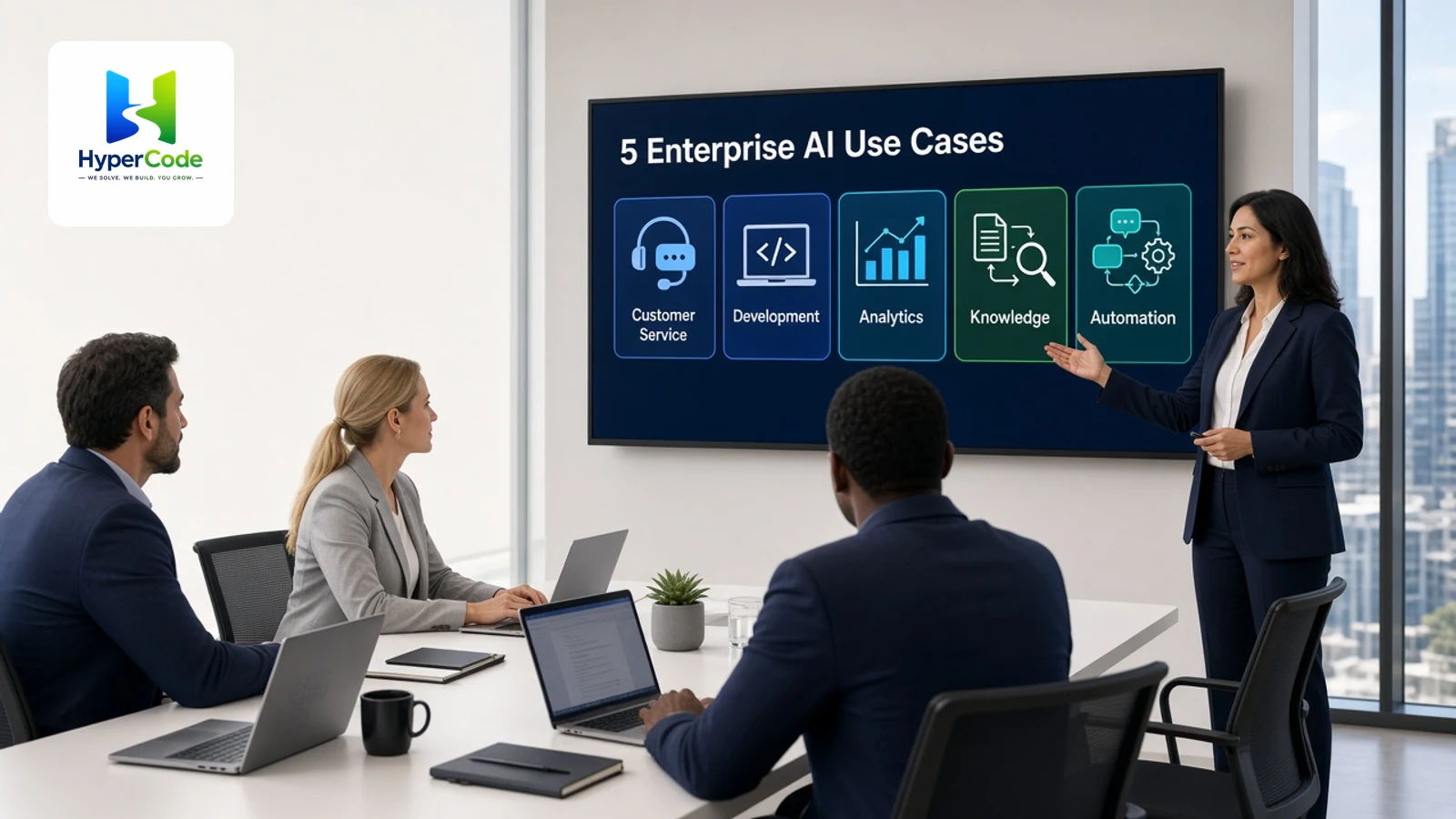
A practical guide to where enterprise AI software creates measurable business value.
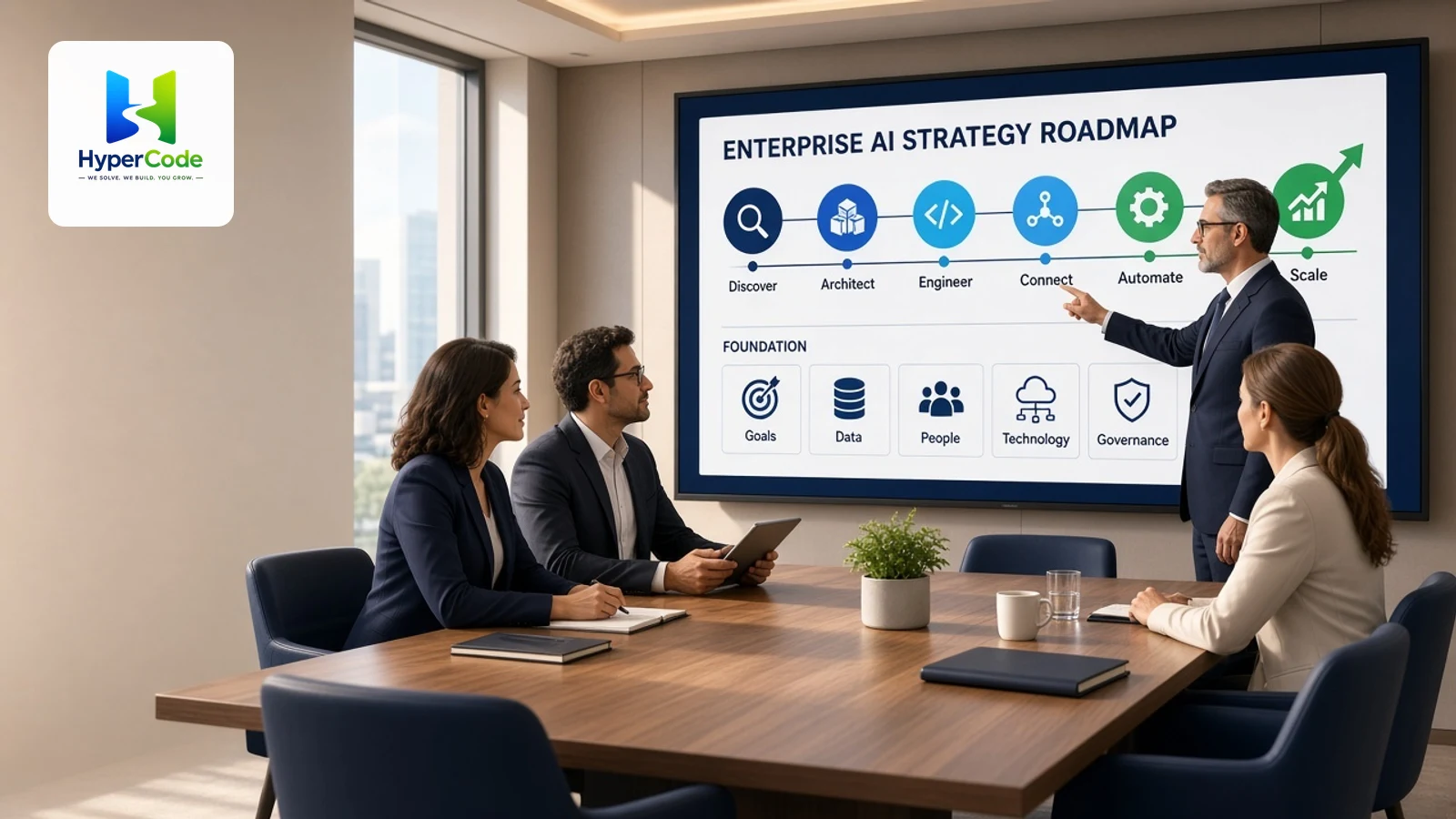
A business-led guide to moving from AI opportunity to practical, secure and scalable enterprise execution.
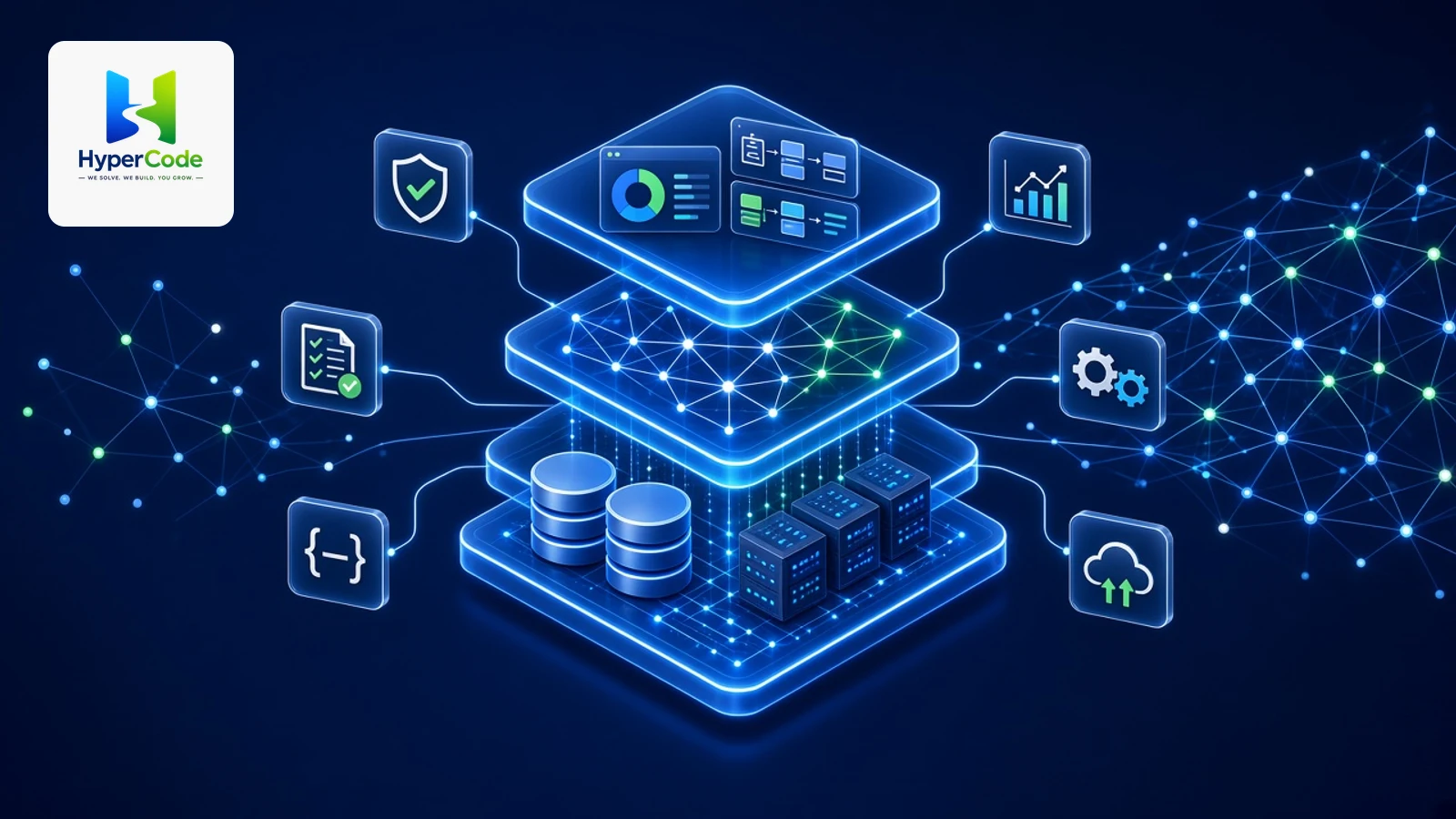
A practical guide to choosing an enterprise AI platform that can scale with your business across data, security, integration, governance, flexibility, performance, and cost.
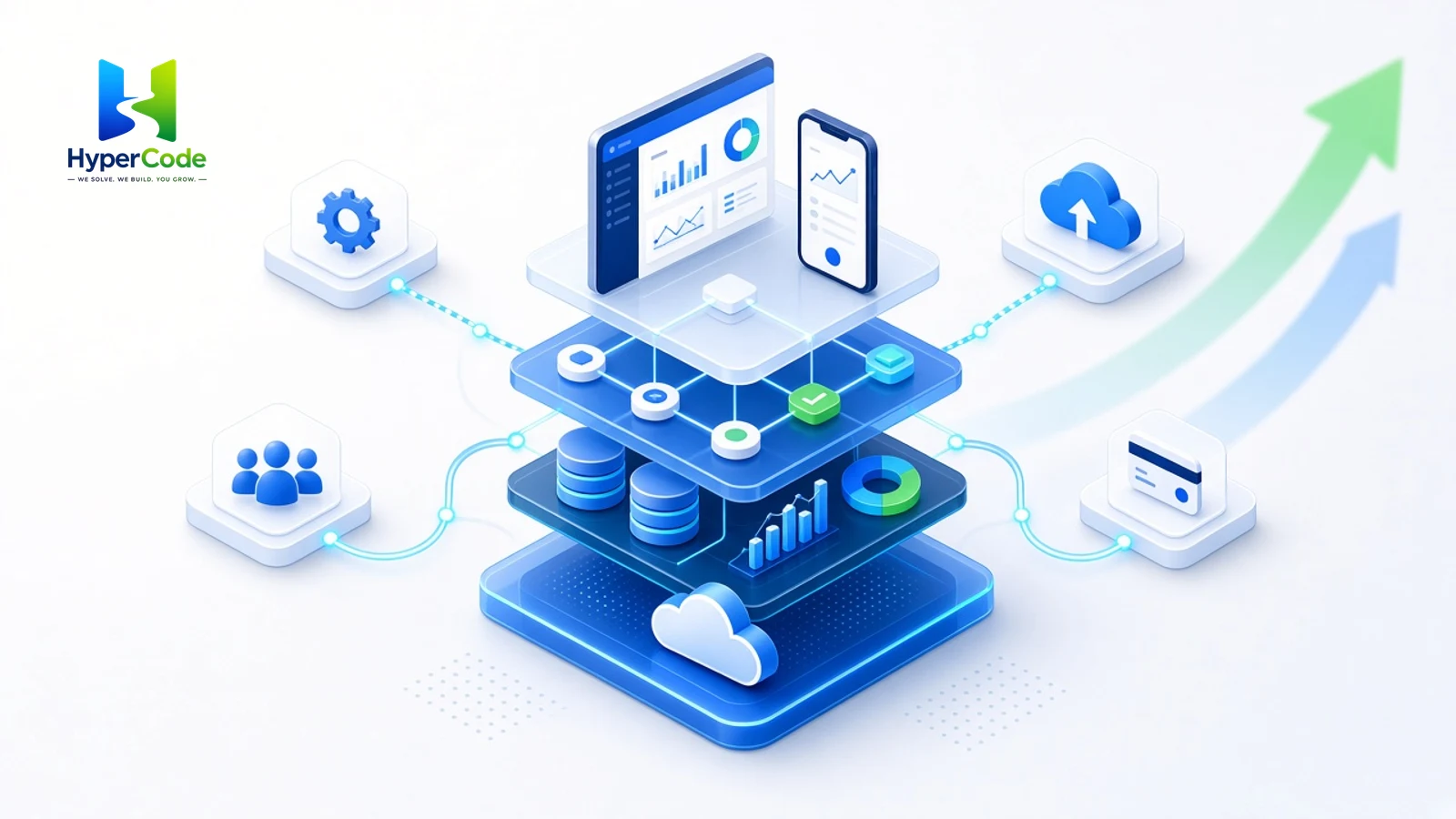
How purpose-built enterprise software helps organizations connect systems, automate workflows, modernize operations and create a scalable foundation for growth.
Cómo las organizaciones pueden utilizar la IA generativa para mejorar las operaciones, fortalecer la toma de decisiones, acelerar la innovación y construir capacidades de IA seguras y escalables.

Una guía empresarial práctica sobre automatización de IA en salud, arquitectura segura, gobernanza, soporte clínico, análisis predictivo e implementación responsable.