
Strategic IT Staff Augmentation for Engineering Teams

HyperCode

Technology Consulting

October 13, 2026
8 min read
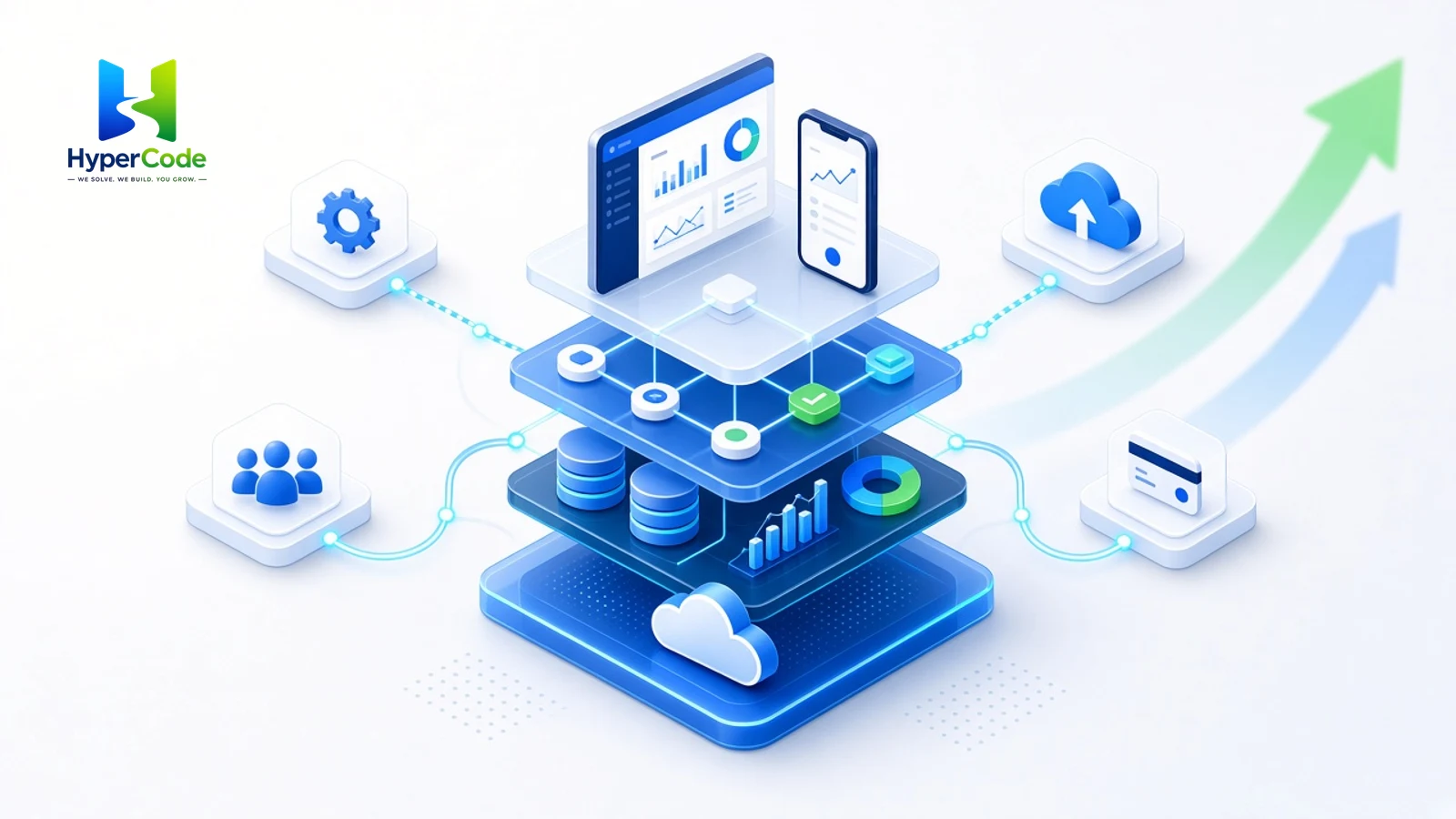
HyperCode engineering team working with an added cloud or DevOps specialist on software delivery, CI/CD, architecture, and product roadmap execution.
Back to Articles

Share Article

The right engineering capability at the right moment—without slowing the business down.

Strategic Engineering Capacity

The Strategic Shift: Capacity Should Follow the Work

Engineering capacity is no longer simply a permanent hiring question. Major product launches, enterprise cloud migrations, core system modernization programs, and ambitious data initiatives frequently create skill requirements that evolve far faster than permanent talent acquisition cycles can accommodate.

In modern technology organizations, IT staff augmentation services offer engineering and product leaders a strategic, practical mechanism to integrate highly specialized technology professionals into active delivery teams—ensuring that roadmap commitments are achieved while allowing the core team to remain undistracted and focused on high-priority outcomes.

The strongest engineering augmentation strategy always begins with a defined business requirement: an upcoming release that must accelerate, a missing technical capability that blocks delivery, a legacy platform requiring modernization, or an architectural workload that has temporarily outgrown the internal team’s bandwidth. The objective is never simply to put seats in chairs; it is to inject the exact technical expertise and velocity needed to propel the work forward.

This disciplined approach allows enterprises to respond dynamically to changing roadmap priorities without taking on the organizational inertia or long-term overhead of permanent headcount. The right engineering capacity, introduced at the right moment, turns delivery bottlenecks into decisive strategic momentum.

Gap Definition

1. Start With the Engineering Gap

Effective technical augmentation avoids hiring around broad, generic job descriptions. Instead, high-performing engineering leaders build capacity around the specific constraints of the work itself. Before engaging external talent, teams must pinpoint whether they are encountering capacity pressure, capability pressure, or a combination of both.

Visual 1 • Diagnostic Assessment

Capacity Pressure vs. Capability Pressure

Capacity Pressure

The team understands the technology stack and architecture thoroughly, but delivery velocity is constrained by sheer volume and timeline demands.

  • Sprint backlog is expanding faster than completion rates
  • Product releases are compressed against firm market deadlines
  • Core engineers are forced to juggle competing priority streams
  • Temporary delivery surge that does not justify full-time hires

Capability Pressure

The roadmap requires specialized technical depth or niche domain expertise that is not currently present within the internal engineering organization.

  • Advanced cloud engineering & Kubernetes platform design
  • Modern CI/CD automation & infrastructure-as-code tooling
  • Large-scale data pipelines, ETL, and analytical warehouses
  • Automated QA test harnesses and enterprise security compliance
Engineering Rule of Thumb

Define the operational engineering gap with precision before adding talent to the roster.

A rigorous engineering gap statement articulates four core parameters: the exact technical workload, the required architectural capability, the expected duration of the surge, and the measurable business outcome the added specialist must influence.

Context & Productivity

2. Match Specialists to the Delivery Environment

While verified technical capability is essential, context determines whether an incoming specialist becomes productive within days or stalls in organizational friction. Quality engineering team augmentation accounts for the target technology stack, development ceremonies, collaboration cadence, and governance boundaries.

Visual 2 • Context Alignment Matrix

Matching Specialized Talent to the Delivery Environment

Dimension 01

Technology Stack

Programming languages, frameworks, cloud services, database engines, container runtimes, and local developer tooling.

Why It Matters: Enables rapid ramp-up and clean code contributions from sprint one.
Dimension 02

Delivery Model

Agile sprint cadence, asynchronous communication norms, peer code reviews, Git branching strategies, and feature ownership.

Why It Matters: Ensures cohesive team integration and frictionless daily velocity.
Dimension 03

Business Context

Product objectives, user personas, regulatory constraints, technical debt trade-offs, and critical release milestones.

Why It Matters: Aligns technical implementation with actual commercial outcomes.
Dimension 04

Security & Access

Role-based environment permissions, secret management, data masking, zero-trust network access, and compliance standards.

Why It Matters: Safeguards production systems and maintains rigorous governance.

Shorten the distance between onboarding and meaningful production contributions by aligning environmental context upfront.

Specialist Disciplines

3. Add Specialized Expertise Where It Changes Delivery

Modern engineering teams do not need to maintain every conceivable technology specialization on their permanent payroll. A core modernization initiative may require deep cloud infrastructure experience for a six-month window; a next-generation application build may require senior full-stack engineers during peak construction; an enterprise data platform may call for pipeline architects.

Visual 3 • Capability Map

Four High-Impact Engineering Augmentation Disciplines

Cloud & DevOps

Strengthen cloud infrastructure, Terraform automation, CI/CD deployment pipelines, container orchestration, and platform reliability during major cloud adoption or migration initiatives.

Data Engineering

Integrate specialists who build real-time streaming pipelines, enterprise warehouses, ETL workflows, and analytics foundations without diverting the internal application engineering team.

Application Engineering

Expand frontend, backend, mobile, or full-stack software capacity around high-priority product roadmaps, complex feature releases, and legacy application refactoring programs.

Quality Engineering

Scale test automation frameworks, end-to-end regression suites, and performance validation capacity when accelerated delivery velocity puts pressure on release confidence.

Operating Discipline

4. Design for Seamless Integration

An augmented engineer must never operate as an isolated contractor on an organizational island. High-velocity technical staff augmentation succeeds because external specialists are intentionally integrated into the team's living engineering culture, workflows, and communication channels.

Visual 4 • Architectural Integration Hub

Connecting Specialists Directly Into the Engineering Ecosystem

Specialized Engineer
Git Repositories
Documentation
Sprint Ceremonies
Peer Code Reviews
Technical Decisions
CI/CD Pipelines
Security Policies
Team Channels

Part of the engineering system—not a separate island.

Integration as a Delivery Discipline

To enable immediate productivity while maintaining architectural integrity, engineering organizations should establish structured onboarding protocols covering:

  • System Topology & Architecture: Upfront walkthroughs of data schemas, service boundaries, and dependencies.
  • Development Standards: Clear linting rules, PR templates, commit guidelines, and branch protections.
  • Definition of Done: Rigorous unit test coverage requirements, staging verification, and documentation baselines.
  • Environment Provisioning: Day-one access to containerized local setups, staging sandboxes, and secure credential vaults.

Flexible Scaling

5. Make Flexibility Part of the Operating Model

The true strategic value of IT staff augmentation services lies in an organization’s ability to adjust technical capability without treating every fluctuation in roadmap demand as a permanent restructuring event. Capacity should expand during surge periods and re-align smoothly as systems stabilize.

Visual 5 • Operational Lifecycle

Dynamic Capacity Timeline Aligned to the Product Roadmap

Stage 01

Core Team Baseline

Stage 02

Peak Delivery Demand

Stage 03

Specialist Capacity Added

Stage 04

Delivery Stabilizes

Stage 05

Knowledge Transfer

Stage 06

Capacity Reshaped

Flexibility is powerful when capacity expands and contracts in direct alignment with delivery priorities.

Engineering leaders utilize flexible augmentation across critical operational scenarios:

  • Executing time-boxed legacy modernization and cloud replatforming windows.
  • Accelerating flagship customer releases to capture critical market timing.
  • Mitigating delivery risk during complex third-party ERP or CRM enterprise integrations.
  • Evaluating and piloting emerging technology capabilities (such as AI workflow automation) before establishing long-term internal competencies.

Accountability & Outcomes

6. Measure What the Added Capacity Changes

A strategic staff augmentation engagement must have unambiguous operational accountability. Rather than tracking billable hours or headcount tallies, mature engineering organizations evaluate impact across delivery throughput, software quality, capability growth, and commercial outcomes.

Visual 6 • Performance Indicators

Four Measurement Pillars for Engineering Augmentation

Delivery Speed

Evaluate improvements in release cadence, pull request cycle time, sprint velocity stability, and milestone delivery predictability.

Software Quality

Monitor downward defect arrival trends, automated test coverage expansion, regression escape reduction, and production uptime stability.

Technical Capability

Assess modern development practices introduced, reusable architectural patterns established, and technical knowledge successfully transferred.

Business Progress

Track critical product launch completions, operational cost reductions, customer experience enhancements, and revenue enablement milestones.

Knowledge Transfer

7. From Temporary Capacity to Durable Capability

The hallmark of an exceptional staff augmentation partnership is that the internal organization emerges substantially stronger at the conclusion of the engagement. Technical expertise, architectural patterns, and automation code must permanently enrich the team rather than departing when the engagement winds down.

Visual 7 • Value Transformation

Converting Temporary Surge into Lasting Engineering Asset

Temporary Capacity

Specialized engineer joins for targeted delivery while keeping core structure intact.

Collaborative Delivery

Active pair programming, comprehensive documentation, and peer code reviews.

Durable Capability

Internal team retains code ownership, architectural patterns, and operational mastery.

The Long-Term Test

The best augmentation engagements leave the internal organization stronger. Capture the knowledge. Build the capability. Then scale with purpose.

Enterprise Delivery Model

8. Strategic Engineering Capacity With HyperCode

HyperCode approaches technology staffing not as a transactional resume agency, but as an integral discipline within a broader software engineering and technology consulting company. Founded in 2014 and headquartered in Schaumburg, Illinois, HyperCode pairs deep technical capabilities in custom software development, cloud infrastructure, enterprise data engineering, and automation with specialized IT talent solutions.

Because HyperCode engineers build and maintain production software across diverse client ecosystems, our staffing conversations remain deeply connected to the actual architectural problems, frameworks, and delivery environments our clients navigate.

Visual 8 • The HyperCode Methodology

The Four Pillars of HyperCode Strategic Augmentation

Pillar 01

Understand the Environment

Start with business requirements, existing tech stacks, technical gaps, and roadmap milestones before shaping the talent profile.

Pillar 02

Align Talent to Outcomes

Match senior, battle-tested professionals to the specific technical deliverables they must influence—never to keyword checklists.

Pillar 03

Integrate With Delivery

Connect specialists directly into client development standards, Git repositories, CI/CD pipelines, and agile sprint ceremonies.

Pillar 04

Scale With Purpose

Maintain operational flexibility while prioritizing measurable release velocity, code maintainability, and long-term capability transfer.

Interactive Selection Roadmap

From Engineering Gap to Delivery Impact

Phase 01

Delivery Need

Phase 02

Identify Gap

Phase 03

Match Specialist

Phase 04

Onboard Quickly

Phase 05

Integrate With Team

Phase 06

Deliver Sprints

Phase 07

Transfer Knowledge

Phase 08

Scale & Adjust

A continuous engineering journey: from identifying technical gaps to shipping high-confidence production software.

Conclusion

From Extra Capacity to Engineering Advantage

Strategic IT staff augmentation is most effective when it functions as an organic extension of overall engineering strategy. The goal is never to build the largest team possible. The true goal is to assemble the precise capabilities required for the next phase of the product roadmap—and make those capabilities productive immediately.

SCALE THE TEAM.
STRENGTHEN THE CAPABILITY.
KEEP THE ROADMAP MOVING.

HyperCode — technology talent and engineering capabilities aligned to business needs.

About the Author

HyperCode

Technology Consulting

HyperCode is a Schaumburg, Illinois-based technology consulting and engineering company founded in 2014.

Need the Right Engineering Capability for Your Next Delivery Stage?

HyperCode helps organizations align specialized technology talent with the engineering work, platforms, delivery practices and business outcomes that matter.

Read Article

Related Articles

Business and technology leaders evaluating custom software development partners using criteria for architecture, engineering, integration, security, delivery, and support.
Software Development

Selecting a Custom Software Development Firm

Learn how to evaluate a custom software development firm based on business fit, architecture, engineering depth, delivery discipline, security, integration, and long-term partnership.

October 13, 2026Read Brief