Enterprise Software Development: Modernizing Core Systems

HyperCode

Technology Consulting

October 6, 2026
8 min read
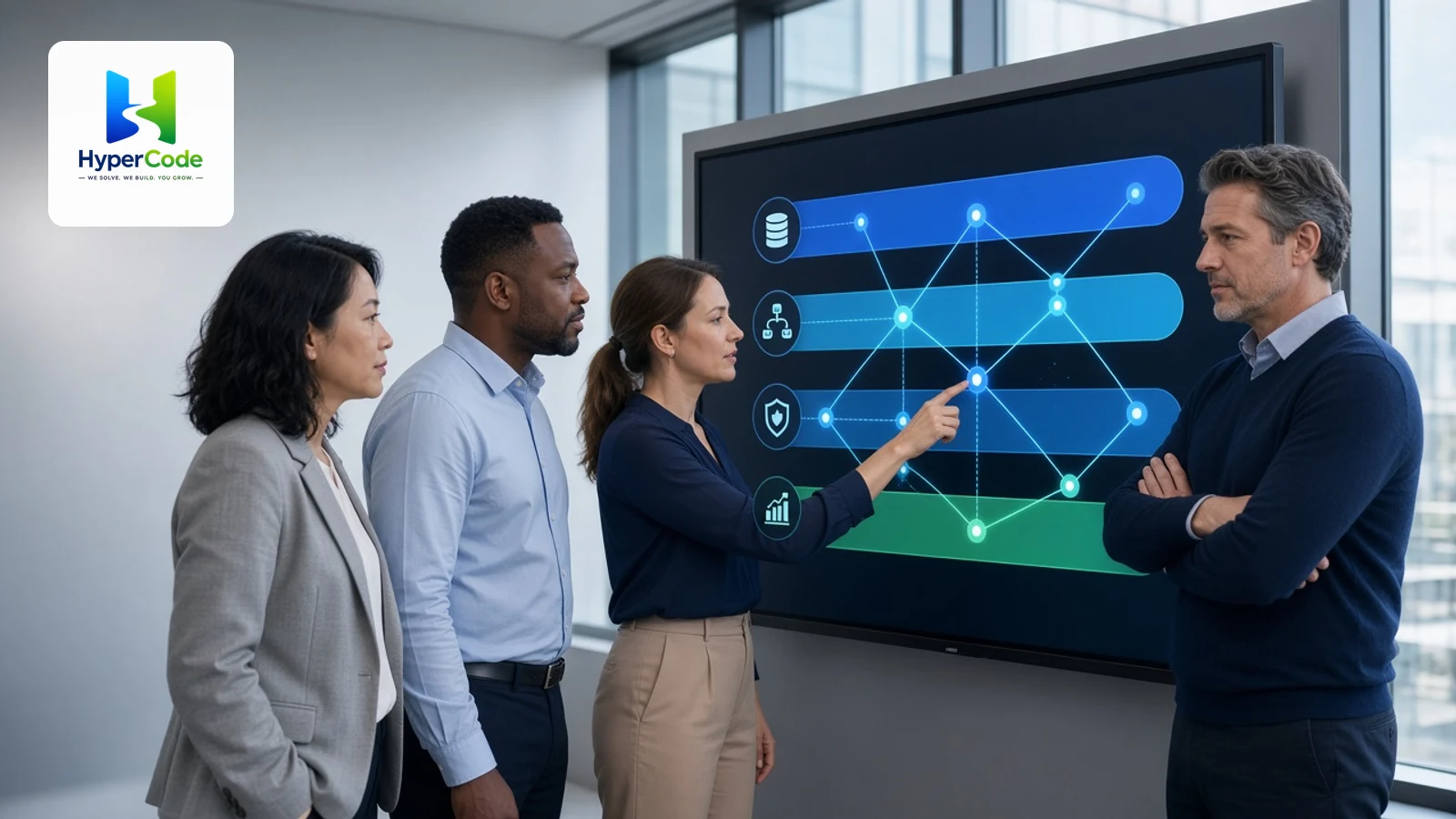
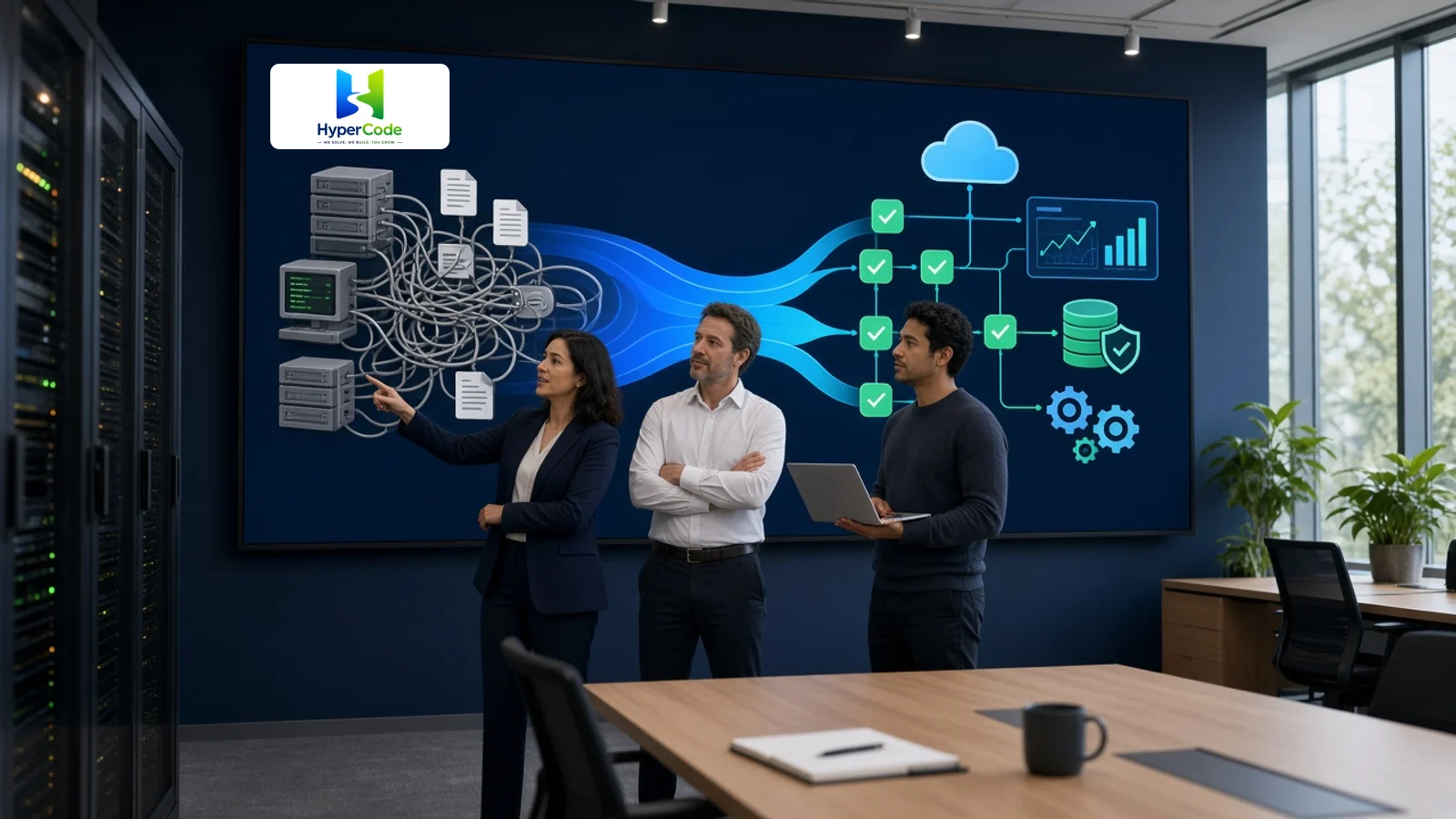
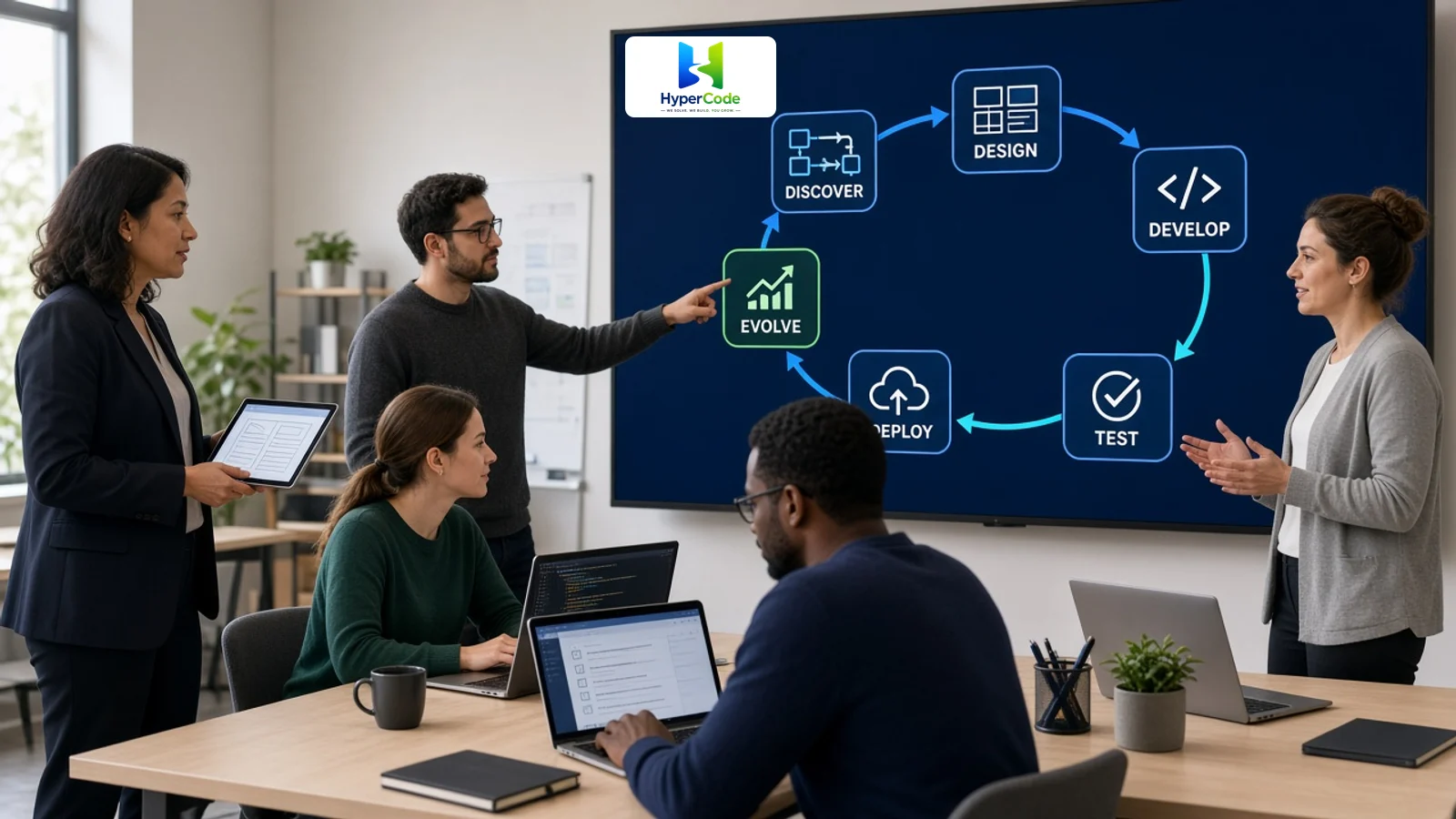
HyperCode technology team planning the modernization of legacy enterprise systems into a connected cloud, data, API, and application platform.
Volver a Artículos

Compartir Artículo

A long-form editorial on the business and engineering of modernization

In an enterprise, the most important software is often the software customers never see. Core systems sit behind transactions, employee workflows, pricing decisions, reporting processes, customer records, inventory, compliance controls, and the integrations that allow one part of the organization to communicate with another.

These systems are more than old software. They hold business rules, transaction history, workflows, pricing logic, compliance controls, data relationships, integrations and years of operational knowledge. Effective enterprise software development modernizes the technology while preserving the capabilities that still matter.

Animated overview

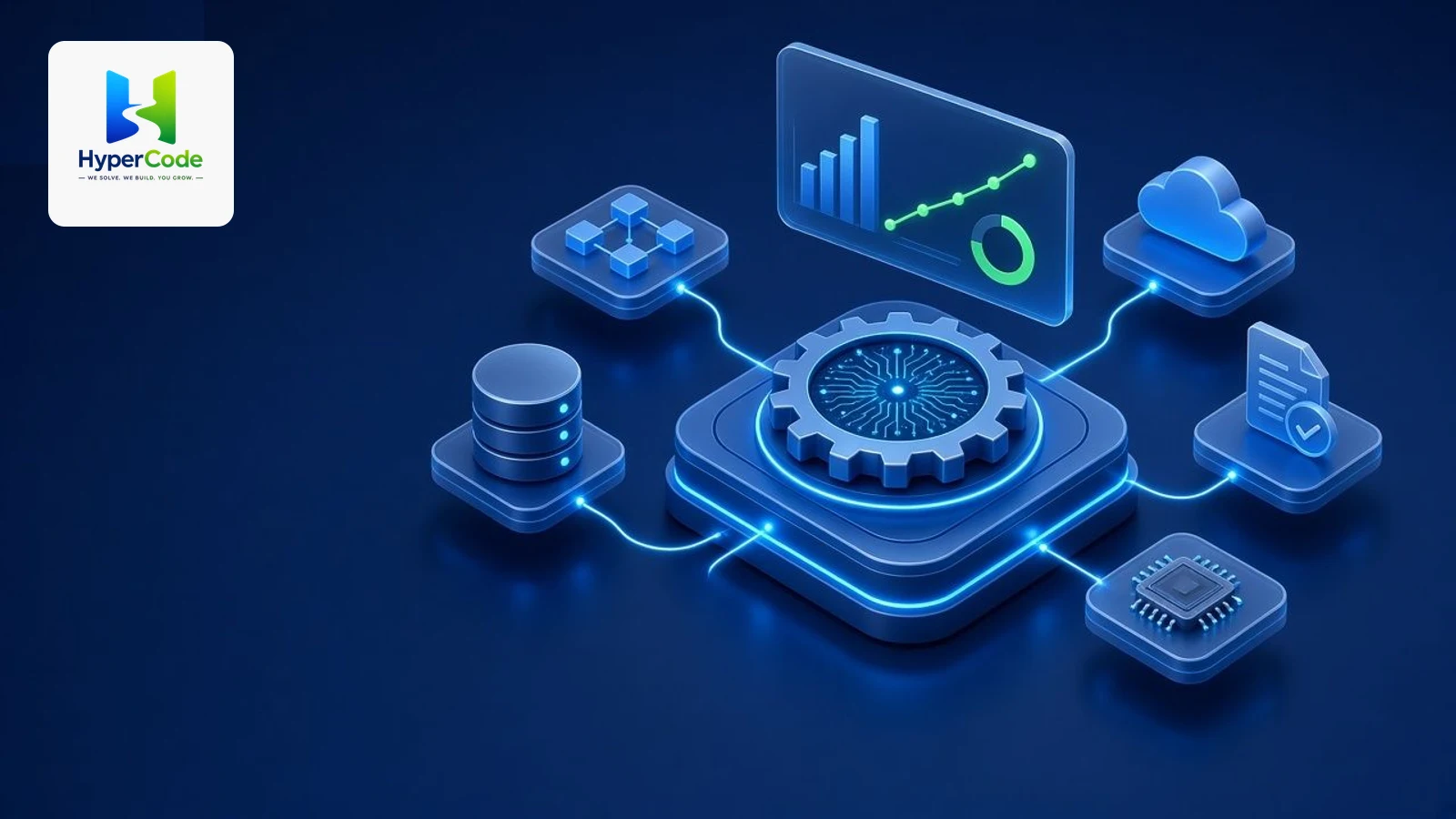
From Legacy Core to Connected Platform

  1. Legacy
  2. Assess
  3. Architect
  4. Modernize
  5. Connect
  6. Cloud, data & APIs
  7. Scale
Legacy dependencies are mapped, capabilities become modular services, APIs and data connect them to the cloud, and business outcomes improve. The bars are conceptual and do not represent measured results.
In this article
  1. Your Core System Is Institutional Memory
  2. Anatomy of a Core System
  3. Modernization Starts With a Map
  4. Preserve What Holds the Business Together
  5. Not Every System Needs the Same Future
  6. A Modernization Program Should Learn
  7. The Business Test
  8. Where HyperCode Fits
  9. Build the Foundation. Then Build What Comes Next.

01 | The Case for Change

Your Core System Is More Than Software. It Is Institutional Memory.

Many core systems have been operating for years. They may have been extended rather than redesigned, connected to newer applications through additional interfaces, or adapted whenever the business entered a new market or introduced a new process. Over time, the technology becomes more than code. It becomes a record of how the organization learned to operate.

The modernization challenge is not simply replacing old technology. It is changing the technology without losing the business knowledge inside it.

That distinction matters. A core system can be technically dated and still contain capabilities the business cannot afford to lose. Conversely, a system can be heavily customized, difficult to maintain, or surrounded by fragile integrations that make even a small change expensive. Modernization therefore begins with understanding, not with a predetermined technology choice.

Microsoft describes application modernization as a continuous lifecycle involving assessment, planning, execution and maintenance. AWS similarly emphasizes understanding the application portfolio, selecting modernization pathways deliberately, and establishing a foundation for modernization at scale. The practical principle is straightforward: modernization is a program of change, not a single migration event.

Anatomy of a Core System

The application is only one layer. APIs, integrations, data, infrastructure, security and user experiences all influence whether modernization creates real freedom to change, so legacy system modernization has to consider the whole estate.

The whole estate

Five Layers Modernization Must Consider

  1. Customer & employee experience
  2. Applications & business logic
  3. APIs • integrations • workflows
  4. Data • reporting • analytics
  5. Infrastructure • cloud • security

Look between the layersDependencies often reveal where the real modernization work is.

02 | Look Beneath the Application

Modernization Starts With a Map

Consider an order-management application. Replacing the application may appear straightforward until the surrounding environment is examined. The application may exchange data with a warehouse platform, a finance system, a customer portal, identity services, analytics pipelines and third-party partners.

Its database may feed operational reports. Its business rules may be embedded in scheduled jobs. Its failures may trigger manual processes that are not documented anywhere.

Dependency map

What Surrounds a Single Core Application

Order-management applicationThe visible part of the system
  • Warehouse platform
  • Finance system
  • Customer portal
  • Identity services
  • Analytics pipelines
  • Third-party partners
  • Database & reports
  • Scheduled jobs
  • Undocumented manual processes
An illustrative example. The amber item marks the kind of dependency that is easy to miss.

This is where modernization becomes an architectural exercise. The organization needs to understand dependencies, data flows, integration patterns, security requirements, operational constraints and the business importance of each workload.

Key idea

A modern application inside an outdated ecosystem can still behave like a legacy system.

Preserve What Holds the Business Together

A common mistake is to treat modernization as a clean break with the past. In reality, many of the most valuable parts of a legacy environment are not the technologies themselves. They are the capabilities, rules, records and operating knowledge accumulated around them.

Modernization balance

Preserve Value. Remove Constraints.

What should stay

  • Business rules
  • Customer & transaction history
  • Proven workflows
  • Valuable integrations
  • Differentiating capabilities

What should change

  • Unsupported platforms
  • Brittle dependencies
  • Duplicated data
  • Manual handoffs
  • Difficult deployment processes
  • Architecture that blocks scalability

Modernization can preserve a stable core while changing the layers around it. It can introduce APIs around an existing capability, move a workload to a managed platform, separate tightly coupled components, improve data access, or rebuild only the part whose architecture genuinely prevents future change.

Modernization does not always mean starting from scratch. Existing business capabilities can be carried forward into newer platforms, technologies and architecture patterns while changing the parts of the system that limit future growth.

03 | Choose the Route

Not Every System Needs the Same Future

Once the estate is understood, the next decision is the modernization pathway. Rehosting, replatforming, refactoring, rebuilding and retiring are different tools for different circumstances.

The right choice depends on what the organization is trying to achieve, how critical the workload is, how tightly it is connected to other systems, and how much change the business can realistically absorb. A system that is stable but difficult to operate may need a different path from one whose architecture actively prevents new capabilities from being introduced.

Decision tree

Five Modernization Pathways

Assess the workload

  1. Rehost

    Move with limited application change when the immediate goal is an infrastructure or platform transition.

  2. Replatform

    Change the underlying platform while keeping most application behavior intact.

  3. Refactor

    Change internal architecture to improve maintainability, scalability, deployment or resilience.

  4. Rebuild

    Implement the capability again when the existing design fundamentally limits the future state.

  5. Retire

    Remove duplicated, obsolete or low-value workloads and reduce unnecessary complexity.

No single pathway is always right. Each workload gets the level of change it actually needs.

The goal is not to modernize every application in the same way. It is to choose the right level of change for the right workload, preserving what still creates value while removing the constraints that prevent the business from moving forward. Many of these routes depend on a sound cloud migration and custom software development capability.

A Modernization Program Should Learn as It Moves

Enterprise modernization becomes difficult when the program is framed as one enormous rewrite. A portfolio approach creates room for learning: assess workloads, identify priorities, establish standards, modernize in manageable waves, and use lessons from early work to improve later waves. AWS guidance recommends beginning with one or two applications and using that experience to establish a foundation for broader modernization.

Modernization roadmap

Modernize in Waves, Not One Rewrite

  1. DiscoverUnderstand
  2. PrioritizeTarget
  3. ArchitectDesign
  4. ModernizeChange
  5. ConnectIntegrate
  6. ScaleRepeat

The sequence matters because modernization creates organizational change as well as technical change. Teams may need new deployment practices, ownership models, observability standards, security controls and ways of validating changes.

04 | The Business Test

If Modernization Is Working, What Should the Business Notice?

The technology should become easier to change, and the business should feel the difference.

The value of modernization should not be measured only by whether a workload moved to the cloud or whether a new architecture diagram was approved. The more useful question is what changed for the people and processes that depend on the technology.

Business outcomes

What the Business Should Notice

  • Faster change

    Improvements no longer navigate the same architectural bottlenecks. Releases become more predictable.

  • Less operational friction

    Fewer brittle integrations, manual workarounds, duplicated processes and maintenance effort.

  • Better experiences

    Applications respond more reliably and support new workflows more easily.

  • Stronger data foundation

    Cleaner integration and accessible data improve reporting and prepare for automation and AI.

These outcomes also need measures. Depending on the workload, organizations may track:

  • Deployment frequency
  • Release lead time
  • Incident rates
  • Recovery time
  • Infrastructure cost
  • Manual processing effort
  • Application performance
  • Data quality
  • Customer-facing service measures

The specific metric matters less than establishing a baseline and checking whether modernization is actually changing it. A connected data engineering and business intelligence foundation makes that measurement far easier.

Modernization is ultimately an investment in organizational adaptability. Technology becomes more valuable when it gives teams room to respond to new requirements instead of forcing every new requirement through yesterday’s constraints.

05 | Where HyperCode Fits

Where HyperCode Fits

HyperCode connects custom applications, cloud and DevOps, data and business intelligence, automation, and digital transformation to the practical work of modernizing enterprise systems. Enterprise application modernization works best when software engineering is connected to data, cloud, integrations, automation, security and business operations.

  • Custom Applications
  • Cloud & DevOps
  • Data & Business Intelligence
  • Automation
  • Digital Transformation

06 | HyperCode Viewpoint

Build the Foundation. Then Build What Comes Next.

Enterprise software development is ultimately about creating systems that can keep adapting. Modernization provides the opportunity to make that adaptability part of the technology foundation rather than something the business has to fight for every time its needs change.

At HyperCode, the work can move from understanding the current environment and defining the right architecture to engineering, connecting, automating and scaling the resulting systems. The goal is not modernization for its own sake. It is technology that supports the next stage of the business.

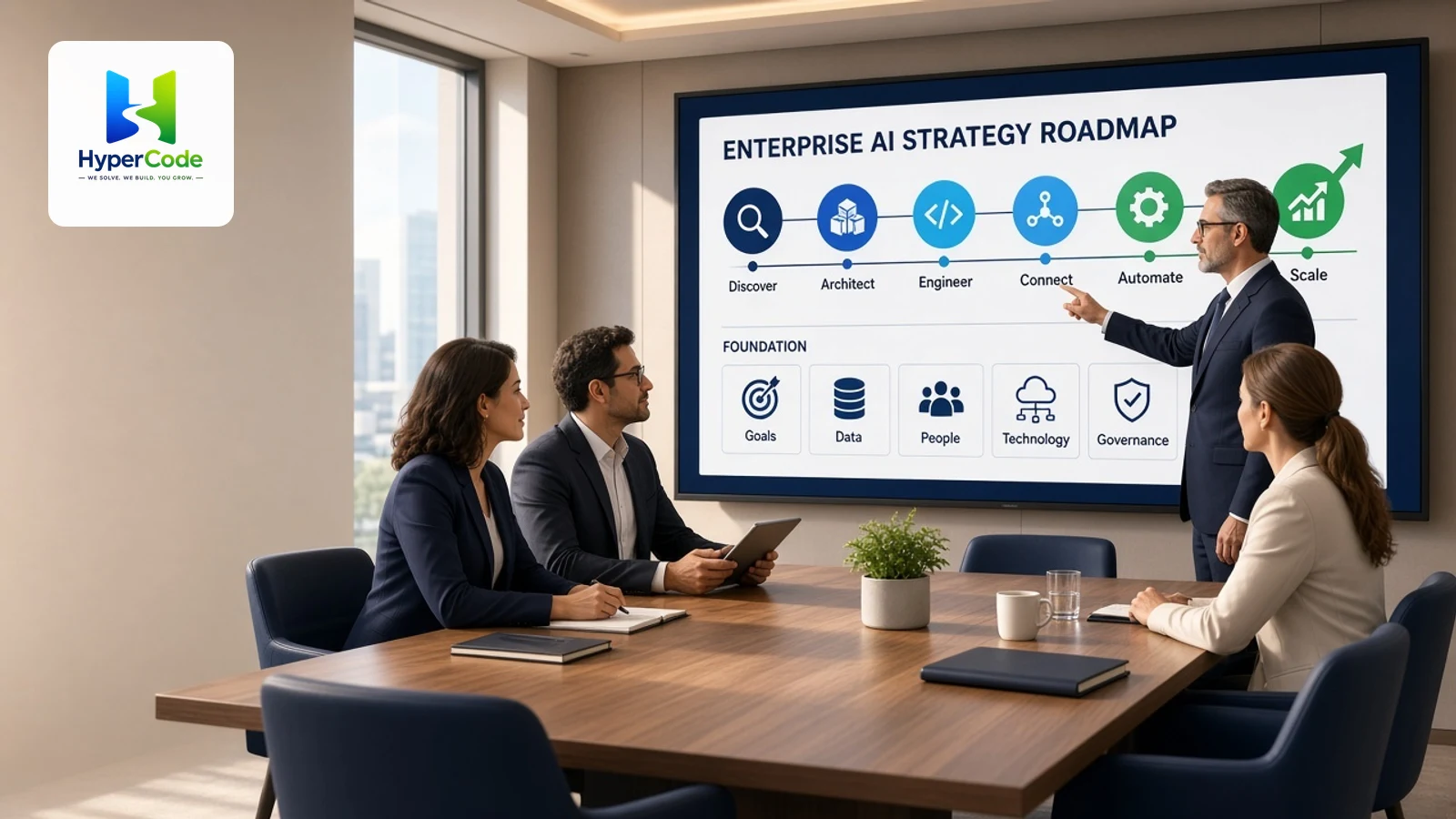
HyperCode modernization path

From Today’s Estate to What Comes Next

  1. Discover

    Understand the current environment

  2. Architect

    Design the right target architecture

  3. Engineer

    Build and modernize the software

  4. Connect

    Integrate applications, data and cloud

  5. Automate

    Improve workflows and operations

  6. Scale

    Extend what works across the estate

Modernization is successful when technology stops being the constraint on the next business idea.

The future of enterprise software development will not be defined only by newer technologies. It will be defined by how effectively organizations use engineering to connect those technologies to real business needs, with security, governance, observability and human judgment built into the lifecycle.

Explore the services behind this approach: custom software development, cloud migration, data engineering, AI workflow automation and digital transformation consulting. For the build side of the journey, read The Lifecycle of Custom Software Design and Development.

Old systems carry the story. Modern engineering helps write what comes next.

Preserve the business knowledge that matters, remove the constraints that do not, and build a foundation ready for the next business idea.

  • WE SOLVE.
  • WE BUILD.
  • YOU GROW.

Sobre el Autor

HyperCode

Technology Consulting

Consultor en HyperCode especializado en soluciones en la nube, sistemas de bases de datos avanzados y arquitecturas empresariales estratégicas.

Ready to Modernize Your Core Systems?

HyperCode helps organizations assess legacy systems, preserve valuable business capabilities, modernize architecture, connect data and applications, and build scalable platforms for what comes next.

Leer Artículo

Artículos Relacionados