
IA
Building Intelligent Systems: Enterprise AI Companies in 2026
A practical guide to how enterprise AI companies design intelligent systems through strategy, data, architecture, automation, and scalable implementation.
October 5, 2026Leer Resumen
HyperCode
Technology Consulting

From a business idea to a dependable digital product
Custom software design and development is not simply the process of writing an application. It is a structured journey for translating a business problem into a digital system that people can actually use and the organization can confidently operate.
That journey moves a business problem through a product concept, an architecture, working software and a production capability, and then keeps it evolving as the business changes. Along the way, thoughtful planning, design, engineering, testing and continuous improvement turn custom software into a long-term business capability.
01 | The Starting Point
The strongest projects begin by understanding the environment around the software: business goals, users, existing workflows, data, integrations, security requirements, and the outcomes the solution is expected to improve.
That early clarity reduces ambiguity later and gives design and engineering teams a shared direction. Microsoft describes the software development life cycle as a framework spanning planning, analysis, design, development, testing, deployment and maintenance.
Business goals and expected outcomes
Users and stakeholders
Existing workflows
Data and integration requirements
Security needs
How success will be measured
Off-the-shelf products can be effective when requirements are standard. Custom software becomes relevant when workflows, integrations, user experiences or business rules require a solution shaped around the organization rather than the other way around. That is the core of custom software development.
Before screens are designed or code is written, teams need a clear understanding of what the software must accomplish, who will use it, what systems it must connect to, and how success will be measured.
Build around the business process first. Let technology serve the process, not force the process into a template.
02 | The Lifecycle
A custom software project may use different delivery methods, but the underlying work remains connected. Requirements influence architecture; architecture shapes development; development feeds testing; testing informs launch; and production feedback drives the next cycle of improvement.
Animated overview
The Custom Software Lifecycle
Business
capability
Connected, not sequential. Agile delivery makes these connections iterative rather than strictly sequential.
The green arc shows Evolve reconnecting to Discover: production feedback starts the next cycle.
Six stages
What Happens at Each Stage
Business goals, users, requirements, scope
Experience, workflows, architecture, integrations
Code, services, APIs, data, environments
Quality, security, usability, performance
Production release, monitoring, handover
Fixes, optimization, enhancements, scale
These stages are not isolated boxes in a waterfall. Each one informs the next, and what is learned later, in testing or in production, feeds back into planning and design.
The journey begins with the business. Teams clarify the problem, map current workflows, identify users and stakeholders, gather requirements, assess feasibility, and establish scope, priorities, risks and success measures.
From idea to product
How a Business Idea Becomes a Dependable Product
03 | From Blueprint to Product
The concept becomes a blueprint. UX and interface design define how people interact with the product, while architecture decisions establish how applications, data, APIs, cloud resources, security controls and integrations will work together.
That architecture becomes the blueprint for engineering. It is also where decisions about web application development, cloud infrastructure and data engineering come together.
With the design and architecture established, engineers translate the blueprint into working software: application components, APIs, data flows, business logic, integrations and deployment environments.
Development is iterative. Teams review functionality, integrate components, manage changes through version control, and validate each increment against the intended user and business outcome.
Testing examines whether the software behaves as expected across functional, integration, system, usability, performance and security dimensions. The exact testing strategy depends on the solution, but quality is strongest when validation is built into delivery rather than postponed until the end.
Quality model
Quality Is Continuous
Quality is not a final checkpoint. It is a continuous conversation between requirements, design, engineering, testing, and the people who will ultimately depend on the software.
04 | Launch Is a Beginning
A finished build is not automatically a finished product. Deployment introduces the software into a live environment, where availability, security, performance, data integrity, user adoption and operational ownership all matter.
A responsible release therefore includes production preparation, configuration, monitoring, documentation, handover and, where appropriate, rollback planning.
The solution is moved into production through a controlled release. Teams validate the production environment, configure infrastructure and integrations, monitor the rollout, and support users through the transition.
Production readiness and configuration
Monitoring, security and performance
Data integrity
Documentation and handover
Once people begin using the software, real-world feedback reveals what should change next. Maintenance includes bug fixes, security updates, performance monitoring, support, enhancements and continuous adaptation to evolving business needs.
That is why launch is not the end. It is the point where the software starts learning from the people and processes it was built to serve.
Security is not a single stage. It belongs in every part of the lifecycle, from the first requirements conversation to day-to-day operations.
Secure by design
Security at Every Stage
Identify data, access, privacy and compliance needs early.
Build appropriate controls into architecture and user flows.
Use secure coding, validation, authentication and controlled access.
Monitor, patch, review and respond as the system evolves.
05 | The HyperCode Perspective
HyperCode positions custom applications and software engineering as part of a broader technology capability that connects software with data, cloud, AI, integrations and digital transformation. Its delivery approach moves through scoping and roadmap, system architecture, agile engineering, and launch and scale.
HyperCode delivery path
From Requirement to Software That Can Grow
Business challenge, workflows, users and requirements
System structure, integrations, data, security and technology
Build, integrate, test, review and iterate
Applications, APIs, data, cloud services and workflows
Production, monitoring, documentation and ownership
Feedback, performance data and new business needs
Explore the services behind this approach: custom software development, web development, cloud migration, data engineering and AI workflow automation. For a broader view of platform growth, read Scaling Success with Custom Enterprise Software.
06 | The Lasting Value
The measure of a successful custom software project is not how much code was written. It is whether the finished system makes the intended work:
The next chapter of software is not only about building new applications. It is about building the right systems, with enough flexibility to change as the business changes.
The strongest custom software becomes part of the organization’s everyday rhythm. It evolves with users, absorbs new requirements, connects with new systems, and creates new possibilities over time.
Custom software design and development is a lifecycle, not a one-time project.
Every great digital product begins with an idea.
But an idea becomes valuable only when it is thoughtfully designed, carefully engineered, and built to work in the real world. At HyperCode, we turn business challenges into custom software that evolves with your ambitions, from the first concept to what comes next.
HyperCode
Technology Consulting
Consultor en HyperCode especializado en soluciones en la nube, sistemas de bases de datos avanzados y arquitecturas empresariales estratégicas.
HyperCode helps organizations move from business requirements to dependable digital products through strategy, design, software engineering, integration, cloud, testing, deployment, and ongoing improvement.
A practical guide to how enterprise AI companies design intelligent systems through strategy, data, architecture, automation, and scalable implementation.
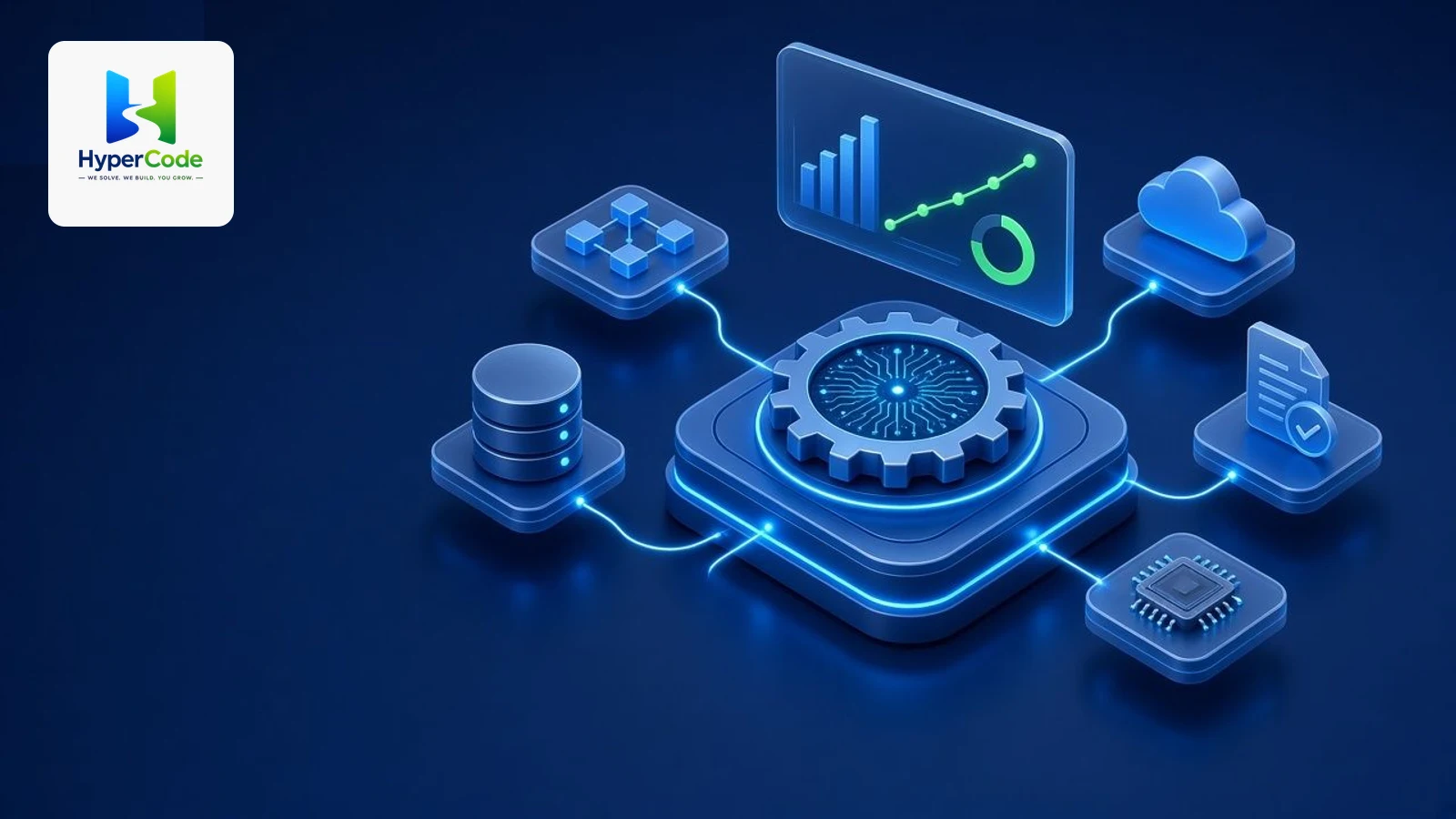
A practical framework for turning automation investment into measurable business value.
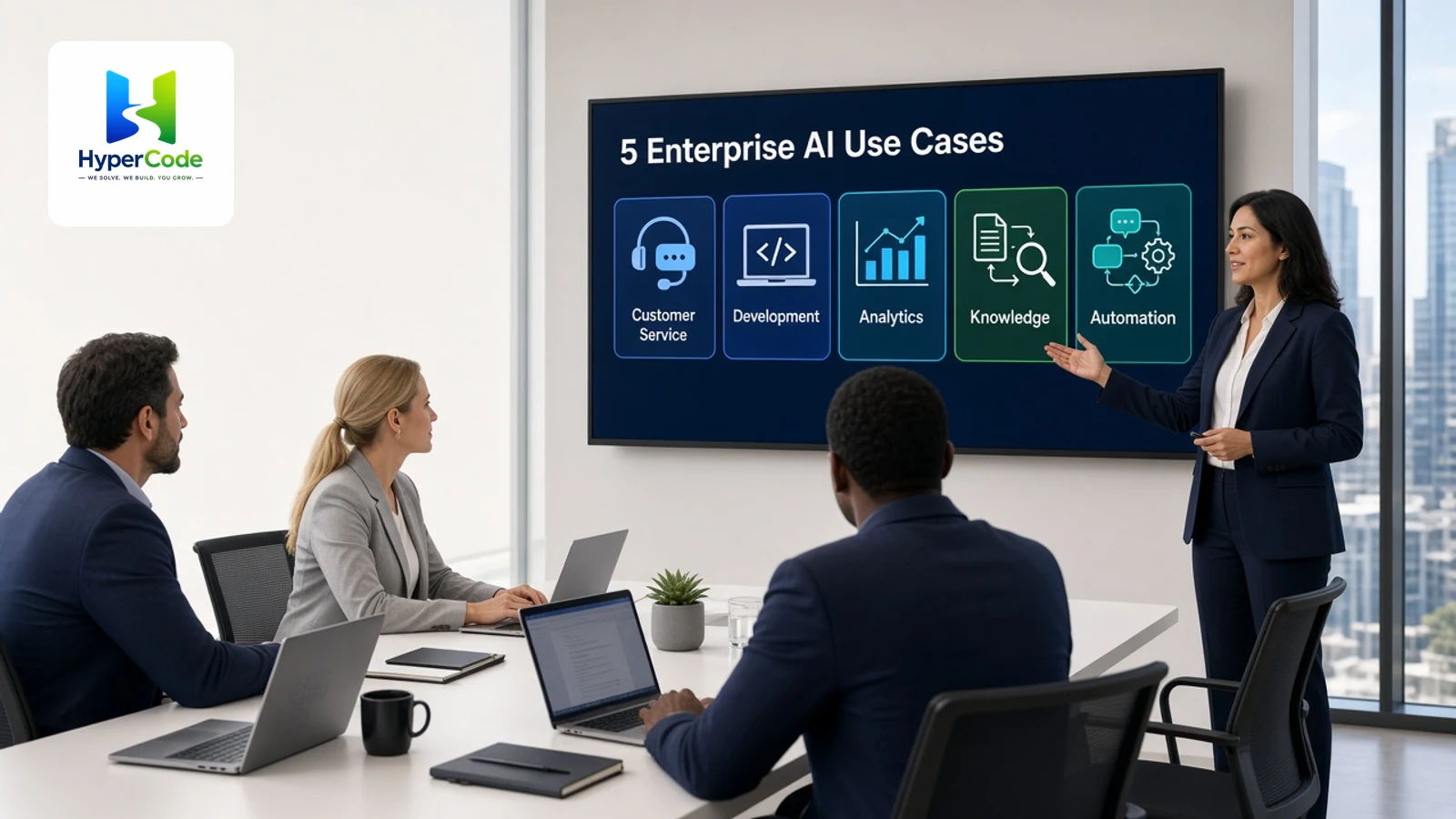
A practical guide to where enterprise AI software creates measurable business value.
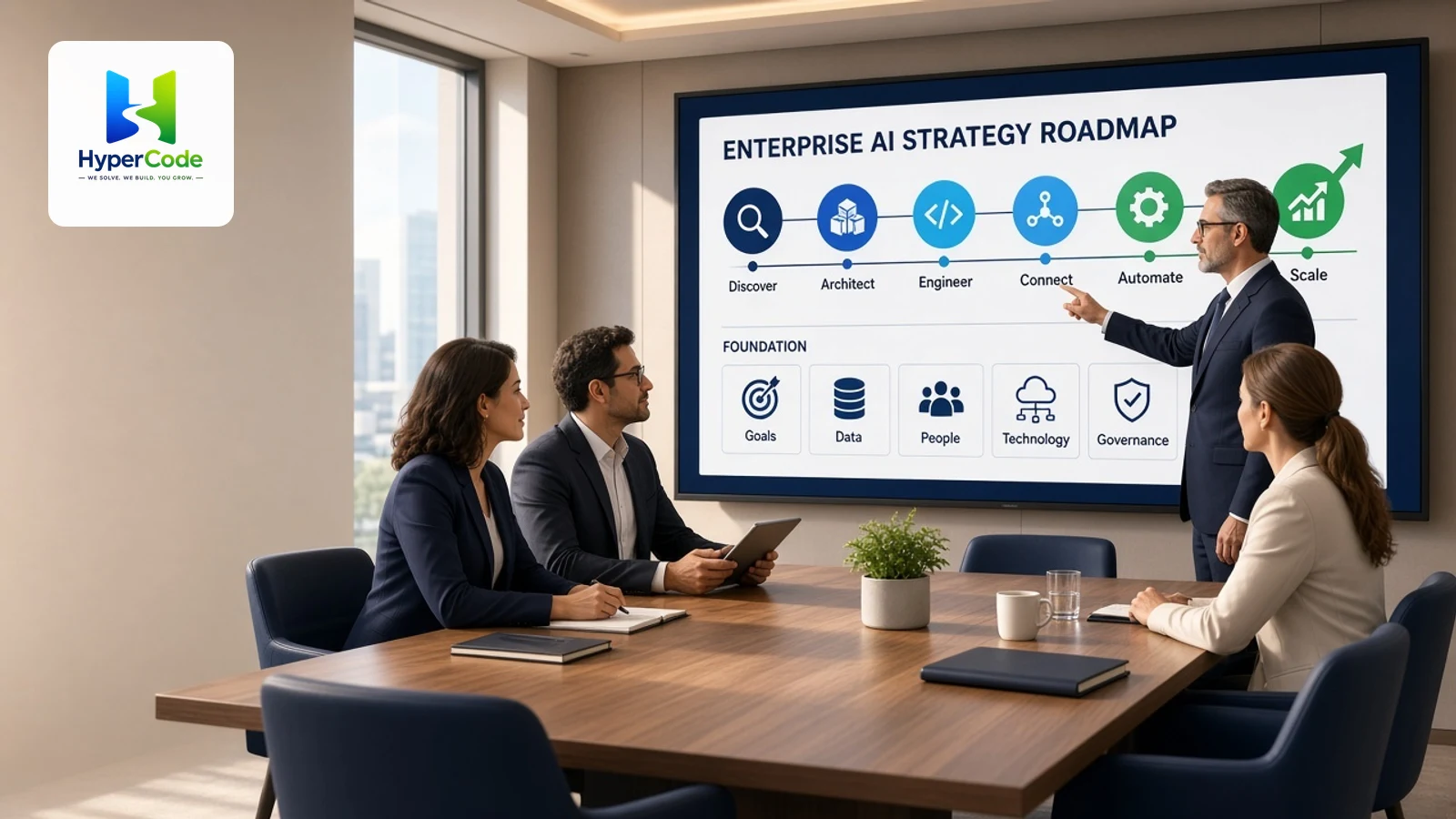
A business-led guide to moving from AI opportunity to practical, secure and scalable enterprise execution.
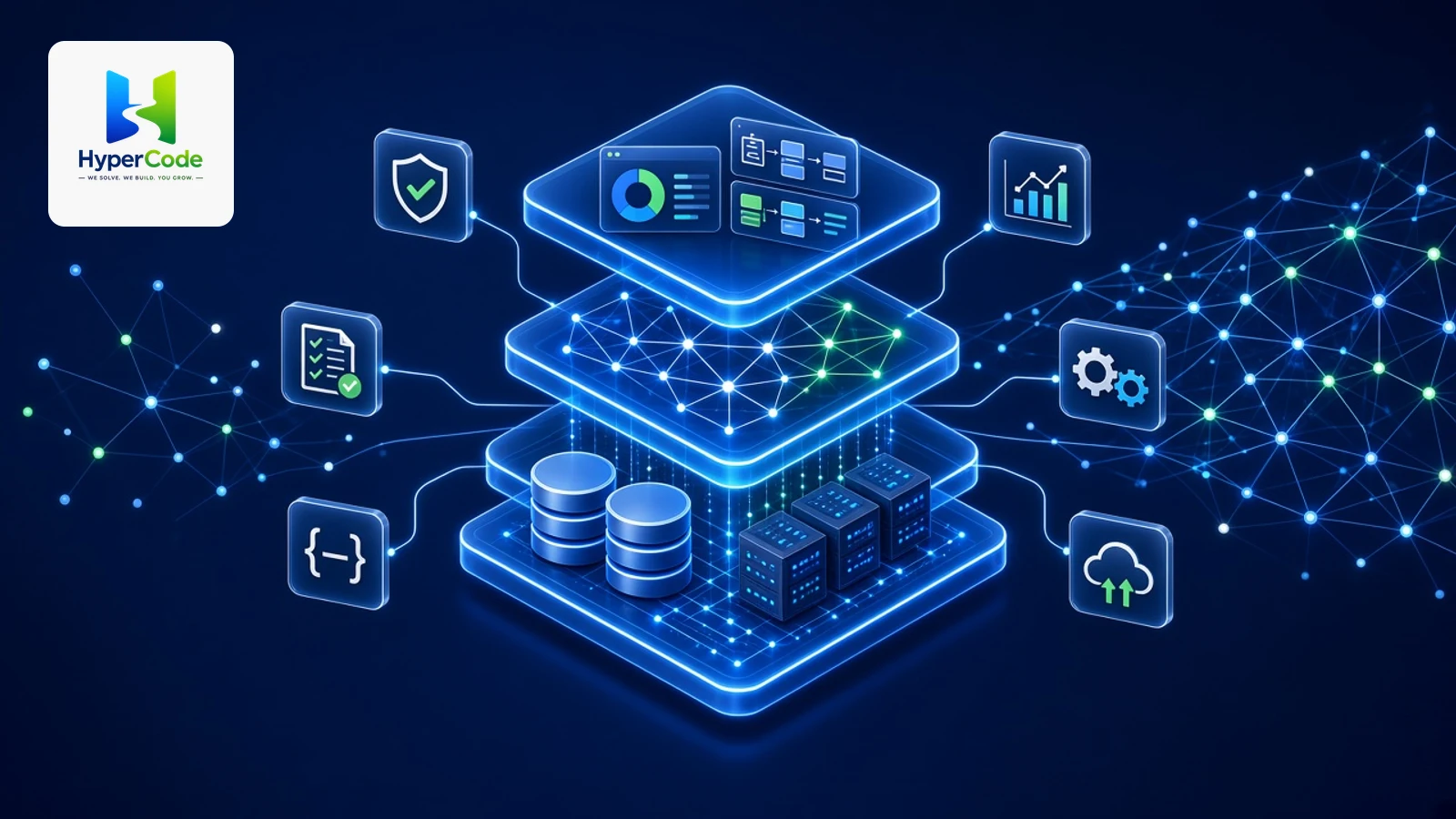
A practical guide to choosing an enterprise AI platform that can scale with your business across data, security, integration, governance, flexibility, performance, and cost.
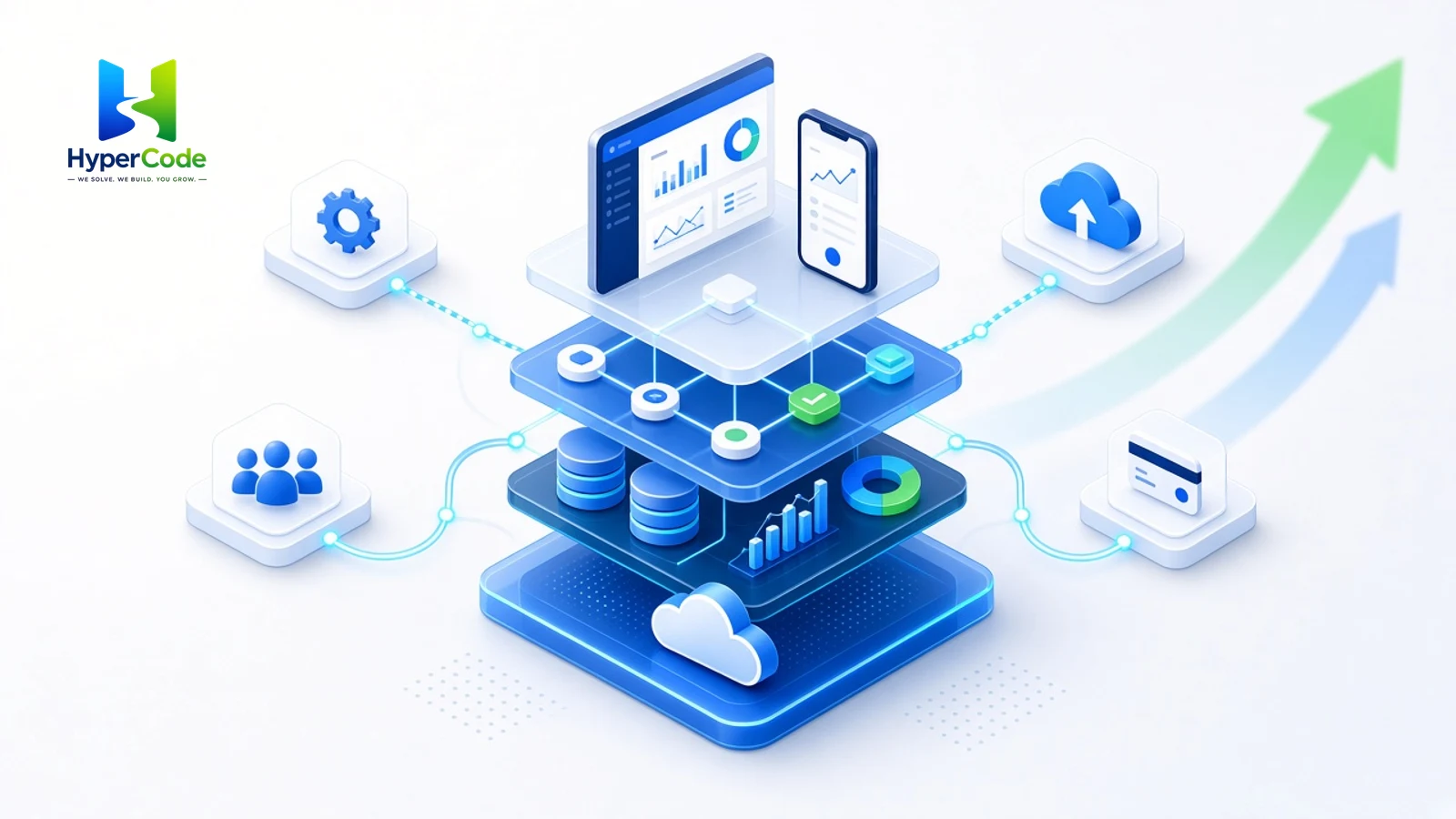
How purpose-built enterprise software helps organizations connect systems, automate workflows, modernize operations and create a scalable foundation for growth.
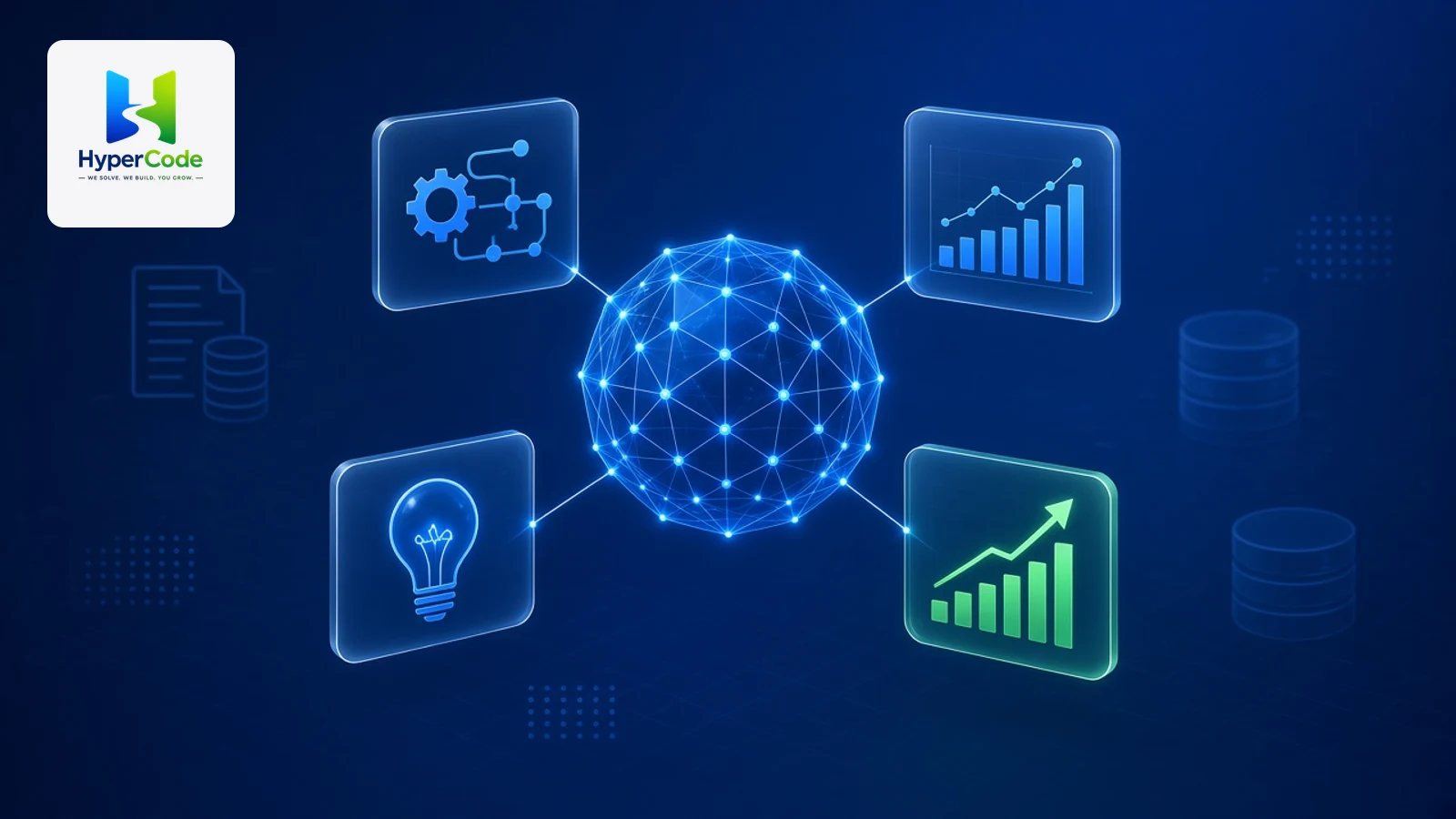
Cómo las organizaciones pueden utilizar la IA generativa para mejorar las operaciones, fortalecer la toma de decisiones, acelerar la innovación y construir capacidades de IA seguras y escalables.

Una guía empresarial práctica sobre automatización de IA en salud, arquitectura segura, gobernanza, soporte clínico, análisis predictivo e implementación responsable.