
Software Development
How to Evaluate Staff Augmentation Consulting Services
A practical guide to choosing the right technology talent partner for speed, capability and long-term business value.
October 15, 2026Read Brief
HyperCode
Technology Consulting

An enterprise architecture and operational guide to scaling high-velocity engineering teams without compromising quality, security, or codebase ownership.
In modern software engineering, release cadence dictates market capitalisation. Partnering with specialized IT staff augmentation agencies transforms engineering talent acquisition from an organizational roadblock into a resilient, on-demand strategic capability.
— HyperCode Architecture & Delivery Practice
Operational Pressures
Enterprise technology leaders—CTOs, Vice Presidents of Engineering, and Technical Product Directors—navigate an increasingly demanding delivery environment. Accelerating roadmaps across generative AI workflows, distributed cloud architectures, event-driven microservices, and continuous security compliance require deep, specialized engineering depth. Yet, traditional hiring cycles often struggle to match the speed of modern agile releases.
In mature enterprise organizations, permanent technical recruitment cycles can stretch over extensive evaluation rounds, architectural review panels, compensation alignment, and notice periods. When sudden delivery pressures emerge—such as refactoring an event-driven billing service or launching an enterprise LLM pipeline—waiting months for new full-time hires risks delayed commercial milestones and mounting technical debt.
To overcome this bottleneck, forward-thinking technology organizations turn to modern IT staff augmentation agencies. Rather than treating talent acquisition as an all-or-nothing hiring commitment or handing architectural control over to opaque outsourcing vendors, staff augmentation embeds vetted, high-performing engineers directly into your active repositories, sprint ceremonies, and CI/CD pipelines.
IT staff augmentation provides immediate, flexible engineering capacity under your direct architectural supervision—ensuring you hit critical sprint deadlines while maintaining complete custody of your codebase and standards.
Framework Comparison
Selecting the right engineering capacity model requires evaluating how each paradigm impacts day-to-day delivery cadence, codebase ownership, team morale, and software architecture. No single model fits every business scenario, but understanding their trade-offs prevents costly organizational friction.
Visual 1 · Capacity Model Taxonomy
Specialized engineers integrate natively into your existing squads, working directly in your Git repos, Jira boards, and CI/CD workflows.
An external vendor assumes end-to-end development of an isolated feature or service, delivering completed deliverables against fixed milestones.
Permanent full-time employees embedded permanently into the corporate structure, driving long-term institutional knowledge.
Visualizing operational trade-offs across engineering control, IP custody, time-to-productivity, and workforce elasticity.
When engineering teams delegate mission-critical code to traditional turnkey outsourcing, they often encounter "black-box" risk: the vendor builds software in an isolated environment, creating architectural blind spots and post-handover technical debt. Conversely, while direct in-house hiring guarantees organizational commitment, it carries substantial fixed costs, equity dilution, and prolonged lead times.
IT staff augmentation delivers an optimal synthesis for fast-growing engineering teams: external specialists adopt your linters, architectural guidelines, pull-request standards, and sprint cadences—functioning as genuine members of your engineering squad while giving leadership the flexibility to adjust capacity as the product roadmap shifts.
Vetting Rigor
The primary point of failure with commodity staffing agencies is reliance on automated resume parsing and keyword matching. Generalist recruiters lack the technical literacy to assess whether an engineer understands distributed concurrency, database indexing strategies, memory management, or automated CI/CD workflows.
For an enterprise engineering organization, introducing an engineer who writes syntactically valid code but lacks architectural discipline can slow down senior developers with lengthy code reviews, introduce security vulnerabilities, or degrade system scalability. True technical vetting must be orchestrated by senior engineering directors and principal architects who evaluate practical problem-solving in production-grade environments.
Vetting should assess how a developer reasons through architectural trade-offs, identifies subtle concurrency race conditions, structures maintainable code, and communicates technical decisions under real-world sprint pressure.
Screening Framework
A rigorous, selective technical screening lifecycle systematically separates superficial resume claims from genuine enterprise delivery capability. When evaluating IT staff augmentation agencies, engineering leaders should look for a structured multi-stage evaluation process:
Visual 2 · Evaluation Framework
Evaluates core data structures, algorithmic complexity (Big-O), memory management, and asynchronous I/O execution under high throughput.
Interactive whiteboarding of high-throughput microservices, CAP theorem trade-offs, distributed caching (Redis), and event streaming (Kafka).
Live review of realistic pull requests to identify security vulnerabilities (OWASP Top 10), SQL injection vectors, and concurrency race conditions.
Practical verification of container orchestration (Docker, Kubernetes), Infrastructure-as-Code (Terraform), and automated GitOps release pipelines.
Asynchronous collaboration testing, pull request documentation, English fluency, cross-functional empathy, and agile communication.
A systematic multi-stage evaluation process designed to verify hands-on engineering competence, architecture fluency, and security awareness.
When specialists successfully pass this structured vetting lifecycle, onboarding velocity accelerates dramatically. By collaborating with client DevOps teams to deploy standardized container environments (such as DevContainers and Docker Compose), augmented engineers can clone repositories, run local development environments, and submit their first reviewed pull requests within their initial sprint.
Domain Expertise
Modern enterprise applications are inherently polyglot and distributed. Monolithic architectures have evolved into microservices ecosystems, distributed event logs, real-time analytics engines, and AI-driven interfaces. Sourcing engineers with production-grade proficiency across this diverse landscape can be exceptionally difficult within local hiring markets.
Visual 3 · Technical Capability Taxonomy
Building intelligent agent workflows, prompt chaining, retrieval-augmented generation (RAG) with vector databases, and custom open-source model fine-tuning.
Architecting resilient, automated cloud infrastructure across AWS, Azure, and Google Cloud with container orchestration and Infrastructure-as-Code.
High-concurrency microservices, robust API gateways, and asynchronous event messaging designed for fault tolerance and high throughput.
Responsive, accessible frontends and enterprise-grade cross-platform mobile apps built with clean component state and modern design systems.
Constructing high-throughput data processing workflows and analytics warehousing to empower real-time intelligence and downstream reporting.
Specialized technical disciplines available through engineering staff augmentation to address targeted architecture goals.
By leveraging an agile augmentation model, engineering leaders can staff dedicated specialists for a targeted initiative—such as an automated cloud migration or a generative AI integration—without taking on permanent payroll obligations once the core architecture reaches operational steady-state.
Operational Integration
Staff augmentation succeeds only when external engineers are fully integrated into the existing engineering delivery engine. Isolating contract developers into external communication channels or third-party repositories recreates the exact information silos that cause outsourcing projects to drift off course.
Visual 4 · Operational Blueprint
Tooling & Infrastructure Layer
Ceremonies & Culture Layer
Operating model ensuring external specialists function within your established engineering tools, code reviews, and sprint ceremonies.
Interactive Delivery Flow
The following visual illustrates how an enterprise engineering organization transitions from initial roadmap pressure to stable production delivery using strategic staff augmentation—maintaining complete architectural control at every milestone:
Interactive Delivery Lifecycle
Sequential progression: identifying strategic capacity gaps, integrating pre-vetted engineers into shared repositories, and accelerating production delivery.
Enterprise Security
For organizations operating in regulated sectors—such as FinTech, Healthcare, and enterprise SaaS—security and IP custody are non-negotiable. A primary concern when engaging external engineering capacity is safeguarding proprietary algorithms, customer data, and source code. Mature IT staff augmentation agencies address these risks through zero-trust infrastructure protocols and robust legal governance.
Visual 5 · Governance Blueprint
Identity & Network Controls
Code Protection & Legal IP
Comprehensive security and legal governance ensuring code integrity, access auditability, and immediate intellectual property ownership.
To eliminate timezone misalignment and communication friction, mature distributed teams prioritize substantial daily working overlap with standard business hours. Daily scrums, pair-programming sessions, and architecture reviews occur in real time, preventing development blockers from lingering across business days.
Financial Engineering
A frequent mistake in engineering budget planning is comparing an augmented developer’s hourly invoice rate directly against a permanent employee’s base salary. This superficial calculation ignores the substantial non-salary overhead inherent in permanent corporate headcount.
Visual 6 · Financial Architecture
Includes extensive recruiting placement fees, statutory payroll taxes, healthcare packages, equity dilution, hardware, and potential severance friction.
Transparent, all-inclusive rates that scale up or down sprint-by-sprint. Zero equity dilution, zero payroll tax administration, and minimal transition friction.
Often presents attractive headline proposals but accumulates unexpected costs through change orders, contract renegotiations, and internal management drag.
Evaluating true workforce cost: comparing long-term employment overhead against flexible operational engineering expenditure.
When engineering capacity is structured as flexible operational expenditure (OpEx), leadership can allocate resources to match current quarterly roadmap commitments. As milestones complete or priorities pivot, capacity can be adjusted smoothly without organizational trauma or severance liabilities.
Actionable Roadmap
To successfully leverage IT staff augmentation agencies and protect architectural integrity, engineering leaders should execute a deliberate 9-step operational framework:
Visual 7 · Execution Framework
Map exact technical skill gaps (e.g., distributed Go backend, Kubernetes CI/CD, or RAG LLM pipeline) rather than generic developer headcount.
Determine whether the initiative requires embedded staff augmentation, isolated vendor outsourcing, or permanent recruitment.
Ensure internal technical leadership retains complete authority over system architecture, code reviews, and deployment decisions.
Review partner vetting rubrics to ensure specialists have demonstrated algorithmic literacy, security hygiene, and clean code practices.
Embed engineers directly into your GitHub/GitLab repos, Jira boards, Slack channels, and standardized container environments.
Enforce role-based SSO, hardware-key MFA, GPG-signed commits, automated SAST/DAST pipeline scans, and strict work-for-hire IP terms.
Track objective agile engineering metrics: pull request cycle time, sprint velocity, deployment frequency, and change failure rates.
Mandate thorough architectural documentation, inline code comments, and regular pairing sessions with internal staff.
Scale capacity up or down as project milestones complete, transitioning mature features into steady-state maintenance.
A systematic operational guide for technology executives scaling engineering velocity without compromising architectural integrity.
Strategic Delivery Partner
HyperCode bridges the gap between executive strategy and hands-on software engineering. Headquartered in the United States and backed by senior technology practitioners, HyperCode is an established engineering consultancy and technology partner—not a resume brokerage.
Whether you require senior backend engineers to refactor a mission-critical payments pipeline, cloud architects to automate a Kubernetes migration, or specialized machine learning engineers to implement enterprise generative AI capabilities, HyperCode provides the technical precision and velocity required to hit your milestones.
Scale the team. Keep control of the architecture. Move the product roadmap forward.
To explore how technical augmentation aligns with your current architecture, read our companion guides on integrating augmented specialists into engineering teams and evaluating a staff augmentation consulting partner, or explore our specialized IT staffing services and custom software engineering practices.
Reader Knowledge Base
An IT staff augmentation agency provides specialized software engineers, architects, cloud specialists, and QA engineers who integrate directly into an organization’s existing engineering teams. Unlike traditional staffing firms that simply forward resumes, modern engineering augmentation agencies evaluate candidates across algorithmic depth, system architecture, and production delivery hygiene, embedding them directly into your sprint ceremonies, source control repositories, and CI/CD pipelines.
Under project outsourcing, software is developed offsite by an external vendor’s isolated team and delivered as a finished milestone, which introduces technical debt, architectural opacity, and vendor lock-in. With IT staff augmentation, external engineers join your existing internal squads under your technical direction, committing code directly to your GitHub or GitLab repositories and adhering strictly to your internal engineering standards.
Direct in-house hiring offers deep organizational loyalty but typically requires lengthy recruitment cycles (often stretching across months of sourcing, panels, and notice periods) combined with fixed benefits, equity liabilities, and severance risks. IT staff augmentation provides on-demand operational elasticity, allowing engineering leaders to add specialized capabilities within days and adjust team size as roadmap priorities shift.
Engineering leaders should leverage IT staff augmentation agencies when they face sudden roadmap acceleration, specialized technology skill gaps (such as LLM fine-tuning, cloud infrastructure migration, or distributed backend refactoring), or seasonal capacity surges where permanent full-time hiring is too slow or introduces excessive long-term fixed cost.
Reputable IT staff augmentation partners operate under comprehensive work-for-hire contracts that assign 100% of all generated intellectual property, source code, and deliverables to the client upon creation. Furthermore, developers work exclusively within client-managed identity providers, VPN/ZTNA tunnels, and private enterprise repositories with mandatory branch protections and cryptographic commit signing.
Augmented developers should be onboarded using standardized DevContainers or Docker Compose environments, granted scoped access through single sign-on (SSO), and fully integrated into daily standups, sprint planning, Jira boards, and peer code reviews. High-performing teams establish substantial daily working hour overlap to maintain synchronous pair programming and architectural alignment.
Mature technology partners provide full-spectrum software engineering disciplines, including Generative AI and LLM orchestration (RAG, vector databases, model fine-tuning), Cloud-Native Systems and DevSecOps (Kubernetes, Terraform, automated CI/CD), distributed backend systems (Go, Rust, Python, Node.js, Java), modern web and mobile frameworks (Next.js, React, React Native, Flutter), and enterprise big data pipelines.
Comparing an augmented engineer’s hourly rate directly to a permanent employee’s base salary overlooks substantial hidden costs. Permanent hiring incurs recruitment agency placement fees, statutory healthcare and payroll taxes, 401(k) matching, equity dilution, equipment, and potential severance friction. Staff augmentation converts these fixed capital liabilities into predictable, fully flexible operational expenditure.
HyperCode is an established technology consulting and software engineering firm, not a transactional recruiter. Technical evaluations are conducted by senior engineering leaders and architects who vet practical coding quality and distributed systems knowledge. HyperCode embeds engineers directly into your architecture, maintaining the delivery velocity and governance necessary to scale mission-critical systems.
HyperCode
Technology Consulting
HyperCode is a Schaumburg, Illinois-based technology consulting and engineering company founded in 2014.
HyperCode helps organizations align specialized technology talent with their architecture, repositories, delivery practices, security requirements, and product roadmap.
A practical guide to choosing the right technology talent partner for speed, capability and long-term business value.

Learn how strategic IT staff augmentation helps engineering teams add specialized capability, accelerate delivery, integrate expertise, and strengthen long-term technical capacity.

Learn how to evaluate a custom software development firm based on business fit, architecture, engineering depth, delivery discipline, security, integration, and long-term partnership.
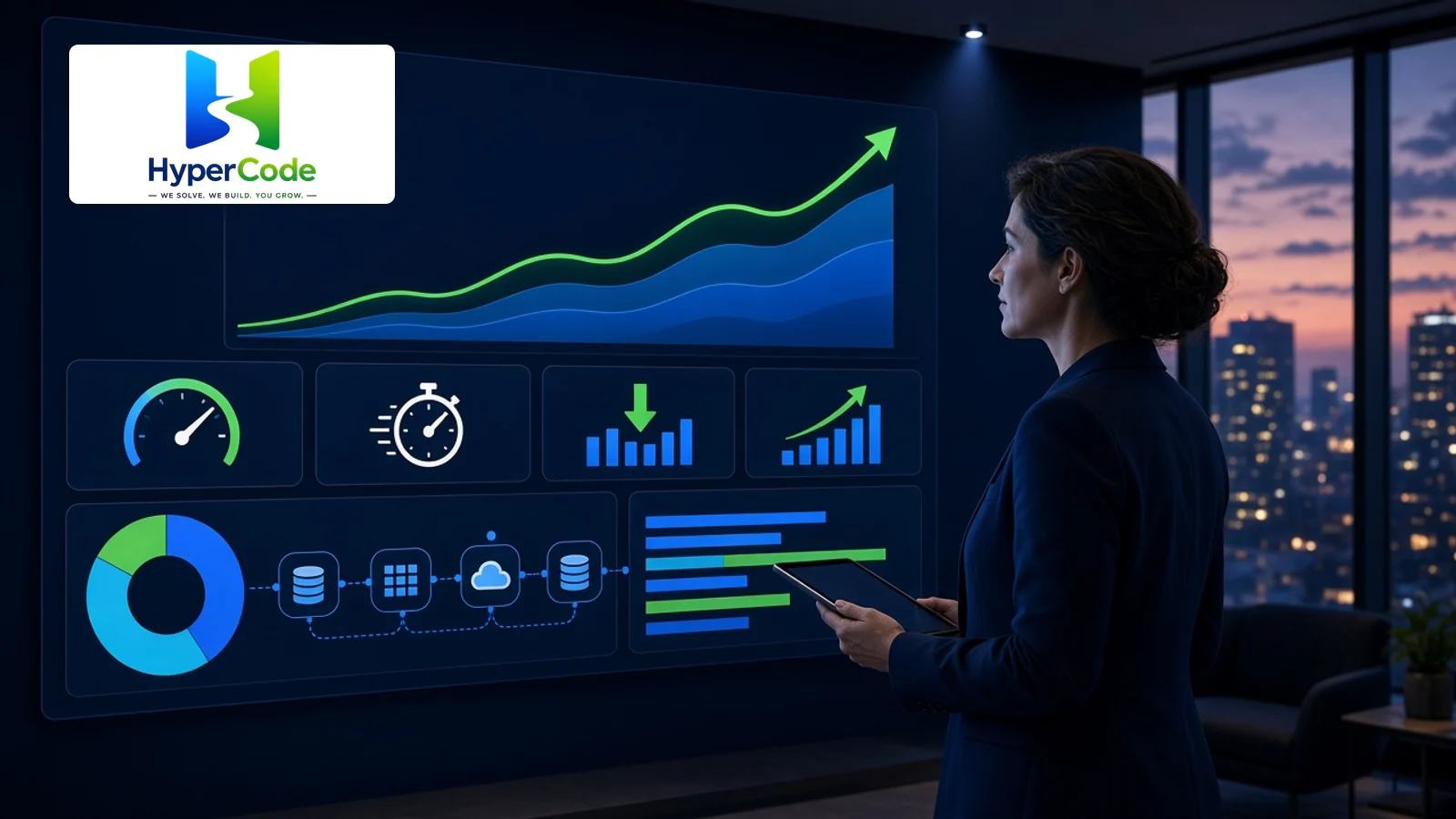
Learn how custom business software development helps organizations improve efficiency, integrate systems, automate workflows, and generate long-term ROI through scalable digital solutions.

Learn why custom software development solutions help enterprises align technology with unique workflows, integrations, data, customer experiences, and long-term business growth.
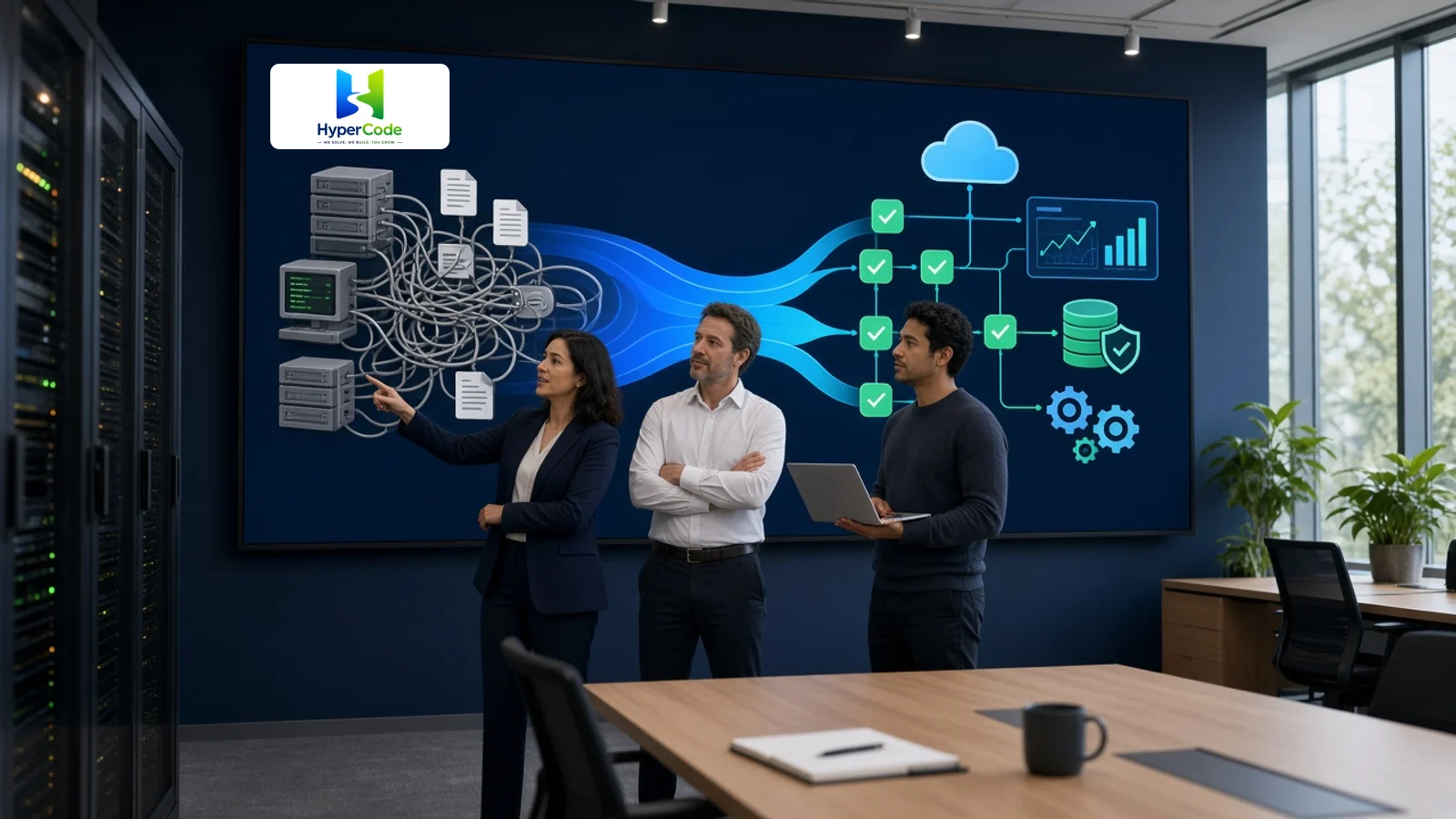
Learn how organizations can modernize core enterprise systems while preserving valuable business logic, data, integrations, and operational knowledge.
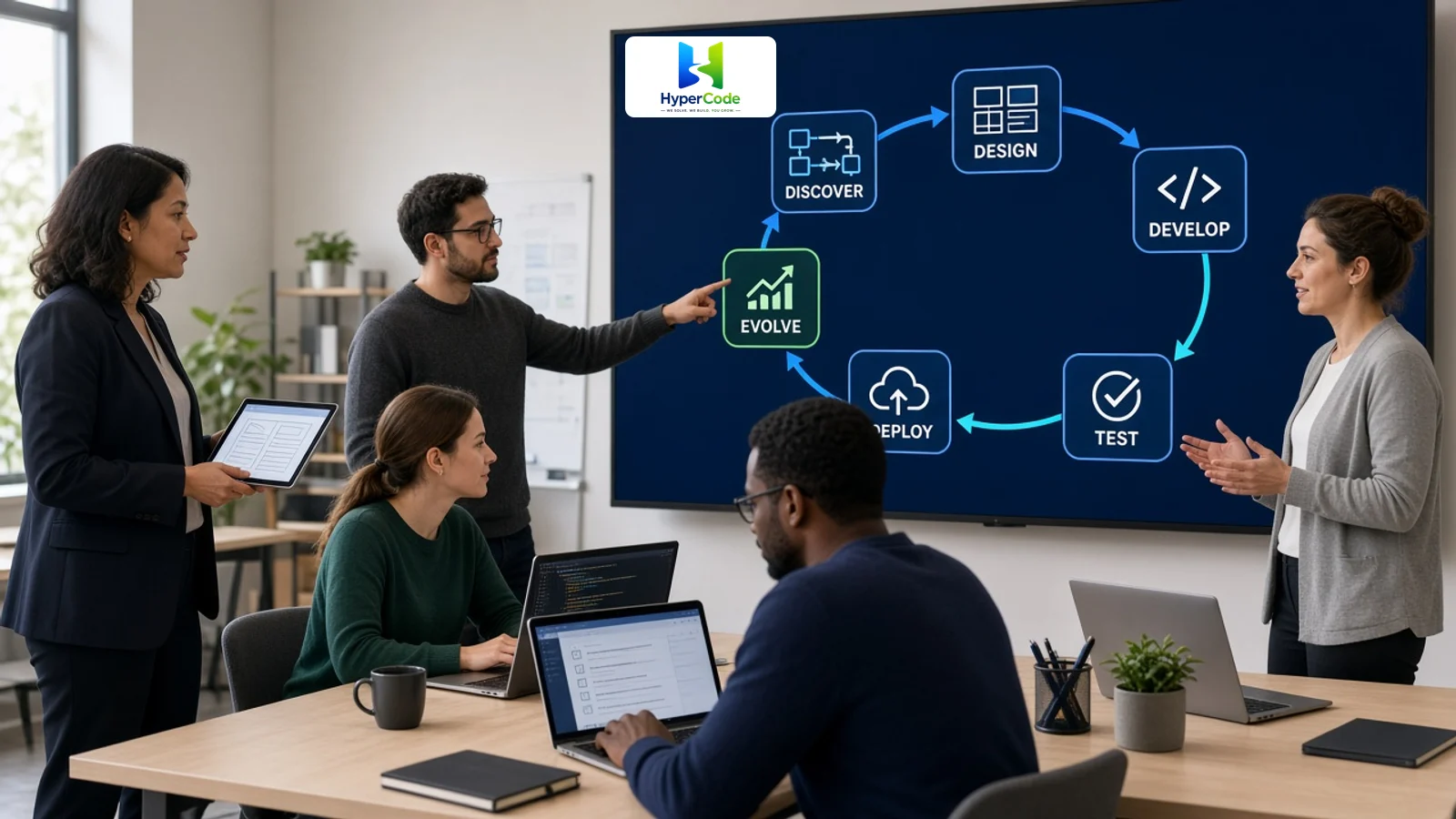
Learn how custom software moves from business idea to dependable digital product through planning, design, engineering, testing, deployment, and continuous improvement.

A practical guide to how enterprise AI companies design intelligent systems through strategy, data, architecture, automation, and scalable implementation.
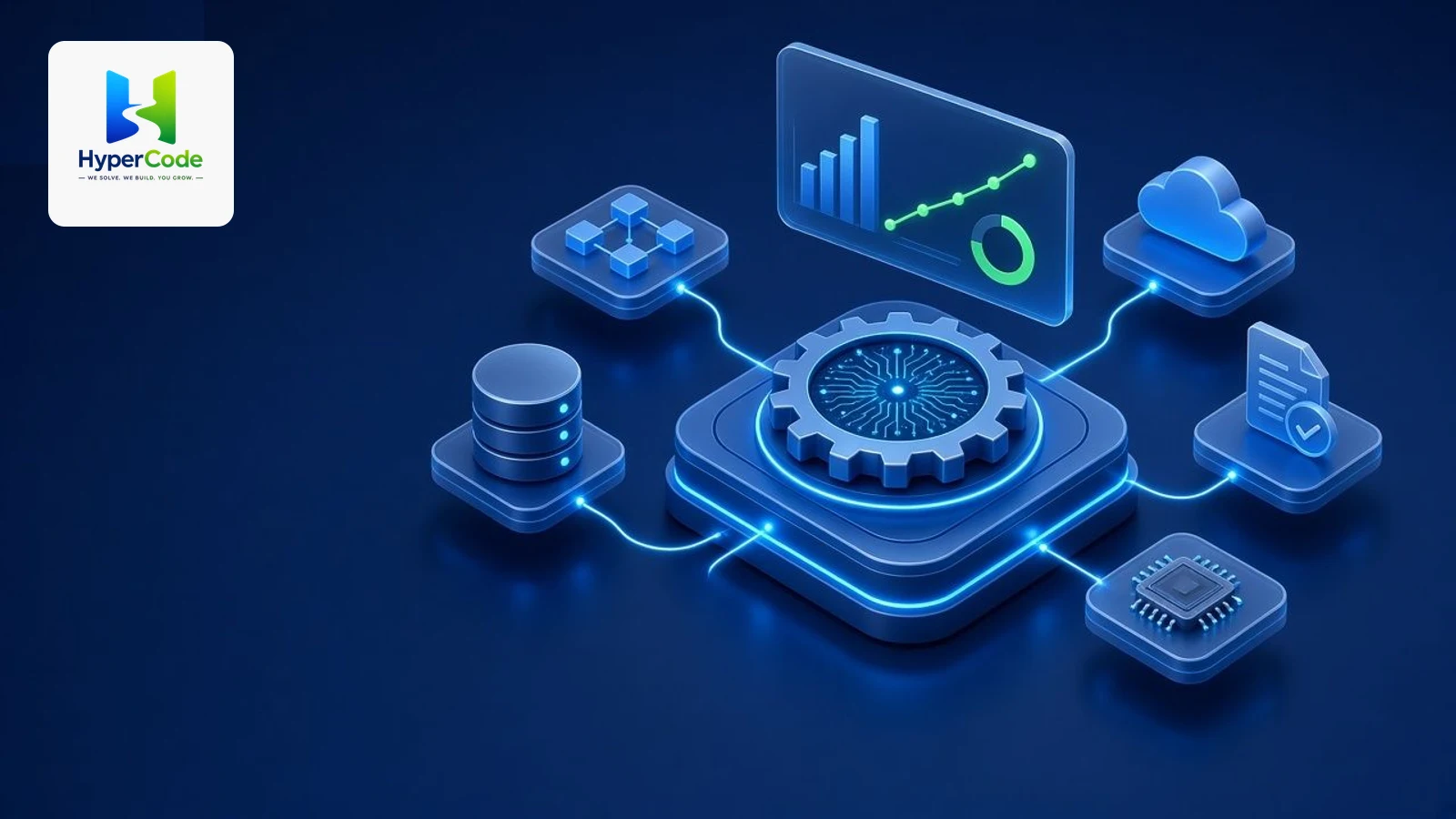
A practical framework for turning automation investment into measurable business value.
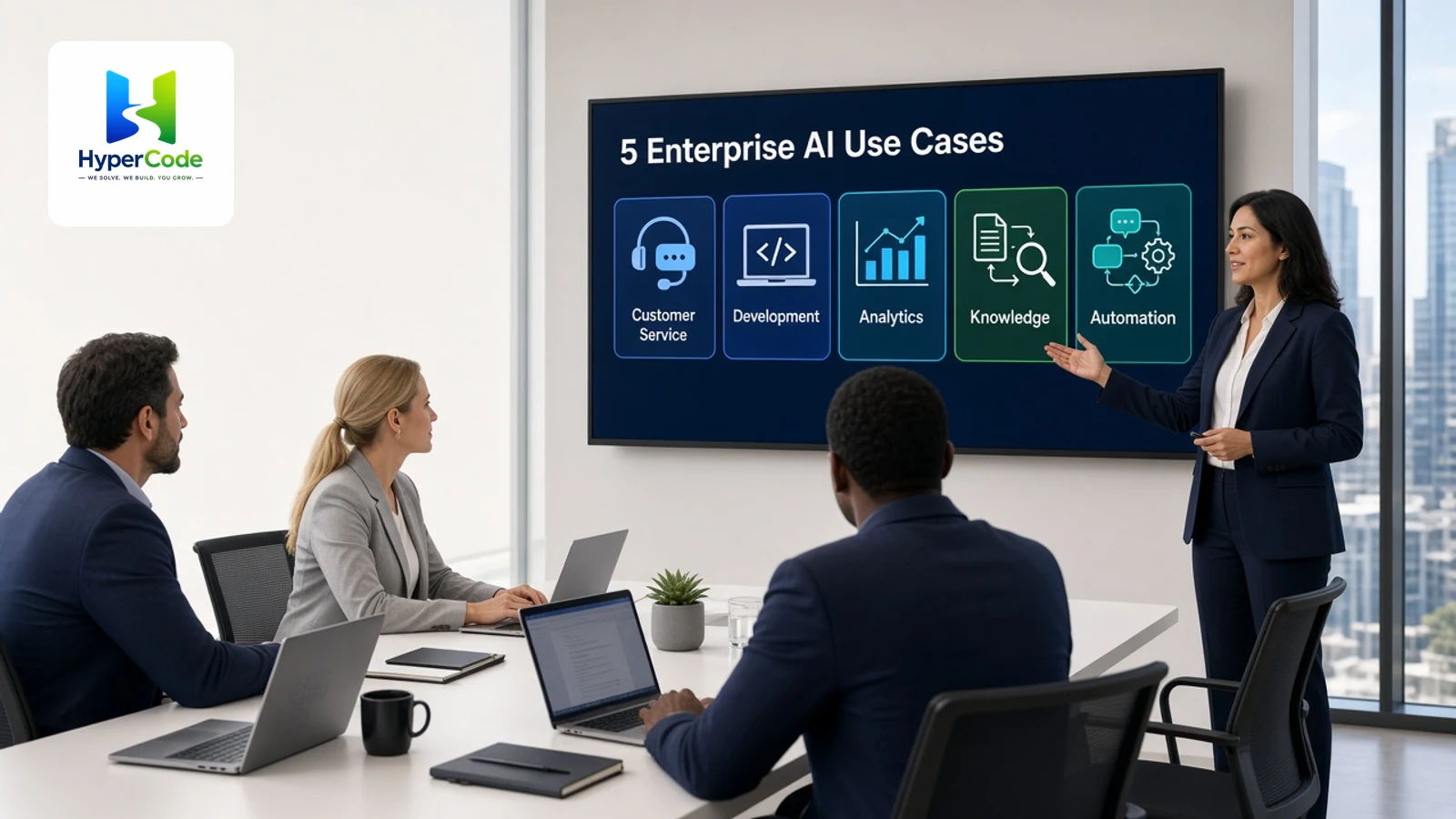
A practical guide to where enterprise AI software creates measurable business value.
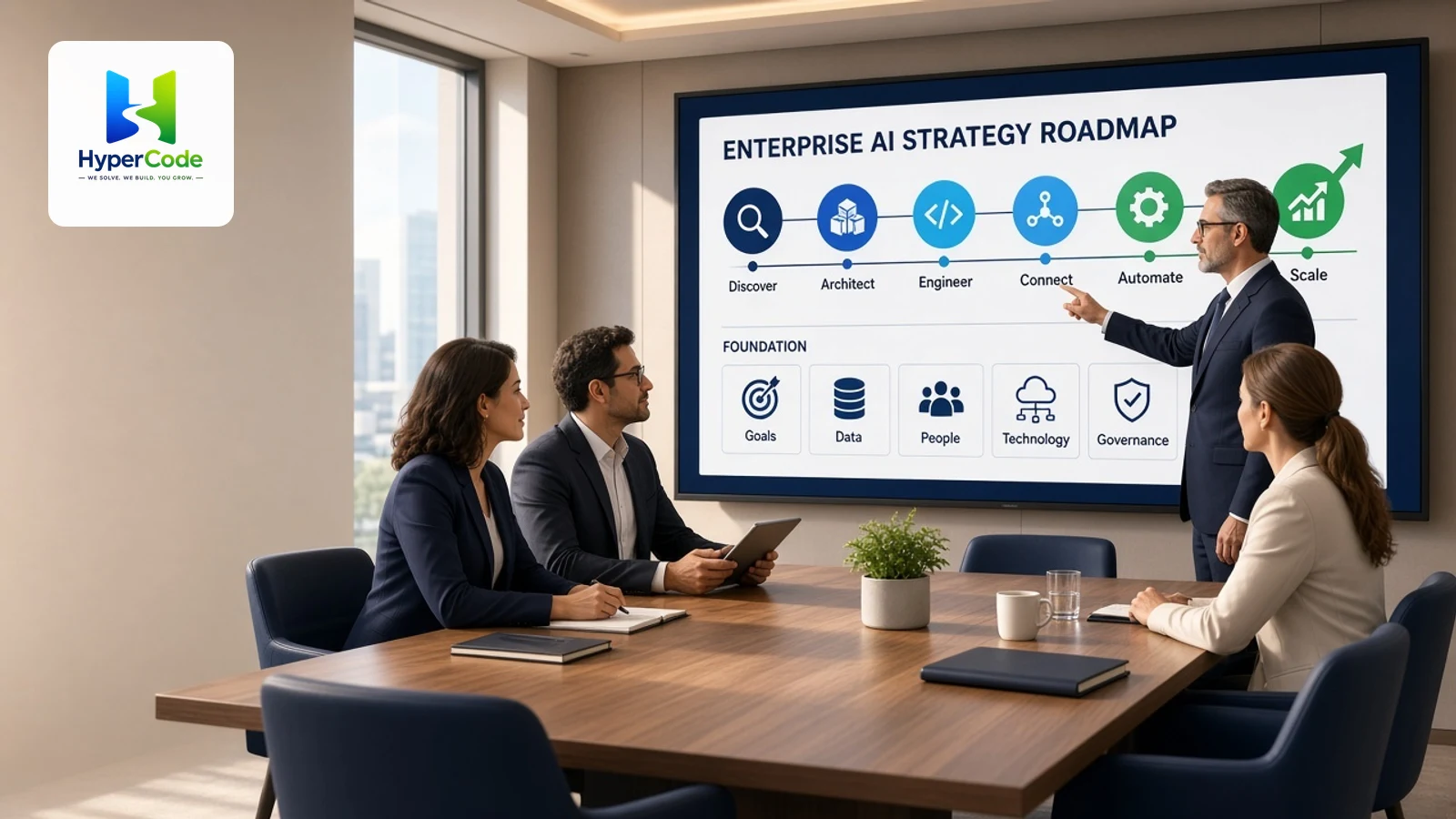
A business-led guide to moving from AI opportunity to practical, secure and scalable enterprise execution.
A practical guide to choosing an enterprise AI platform that can scale with your business across data, security, integration, governance, flexibility, performance, and cost.
How purpose-built enterprise software helps organizations connect systems, automate workflows, modernize operations and create a scalable foundation for growth.
How organizations can use generative AI to improve operations, strengthen decision-making, accelerate innovation, and build secure, scalable AI capabilities.

A practical enterprise guide to healthcare AI automation, secure architecture, governance, clinical support, predictive analytics, and responsible implementation.