What Is an ERP System? Meaning, Modern Architecture & Enterprise Guide

HyperCode

Enterprise Architecture & Technology Consulting

October 25, 2026
12 min read
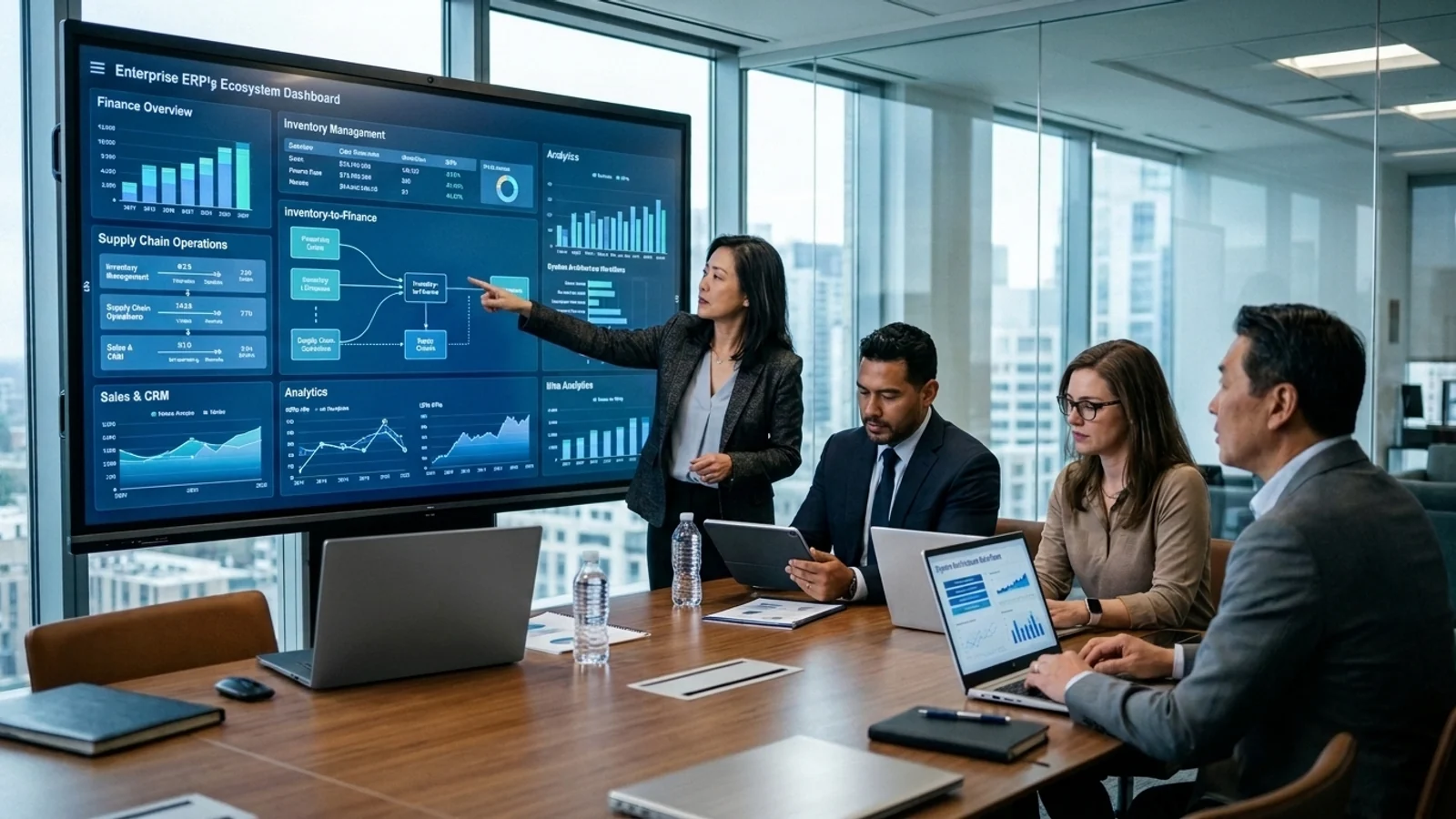
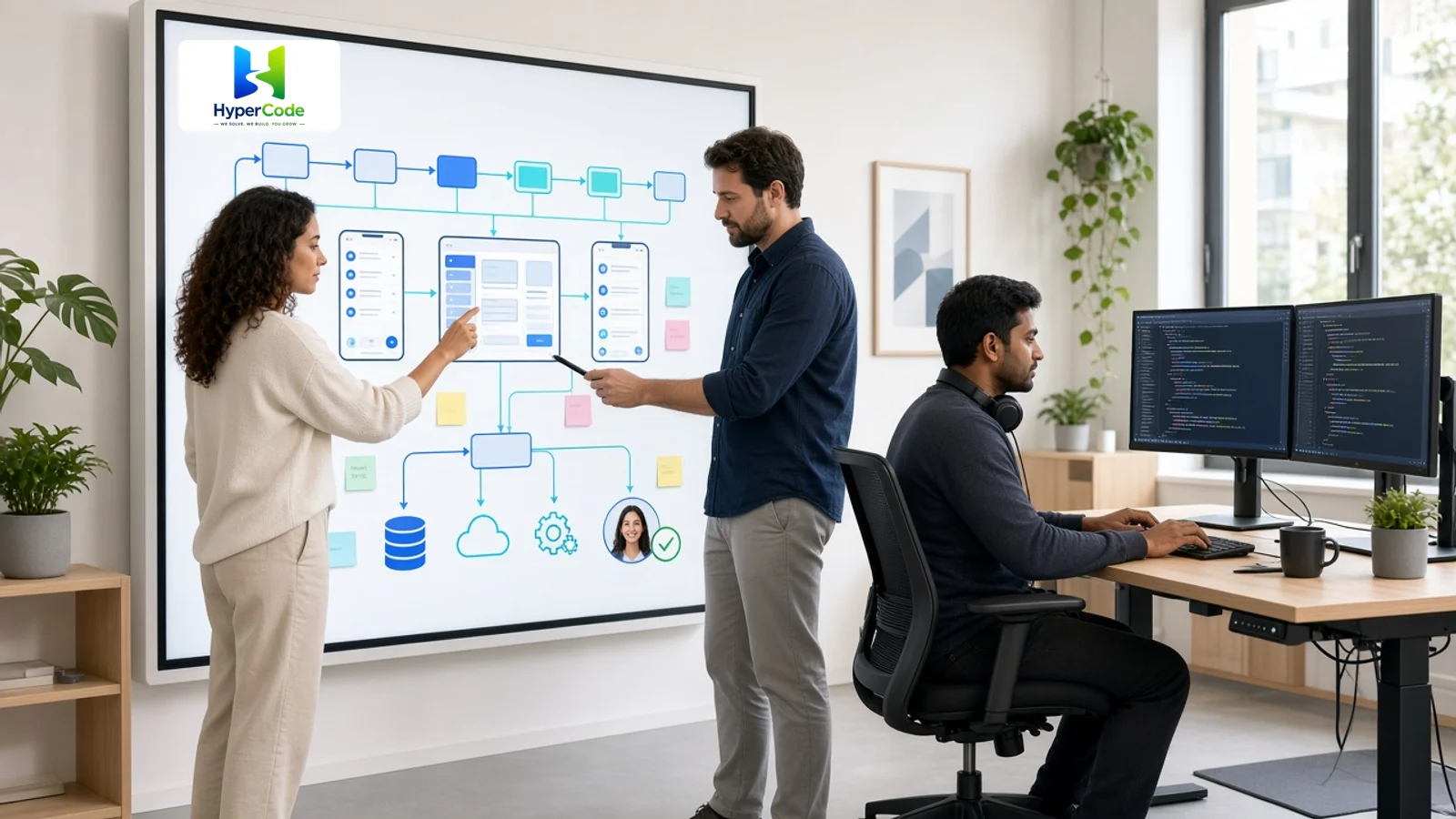
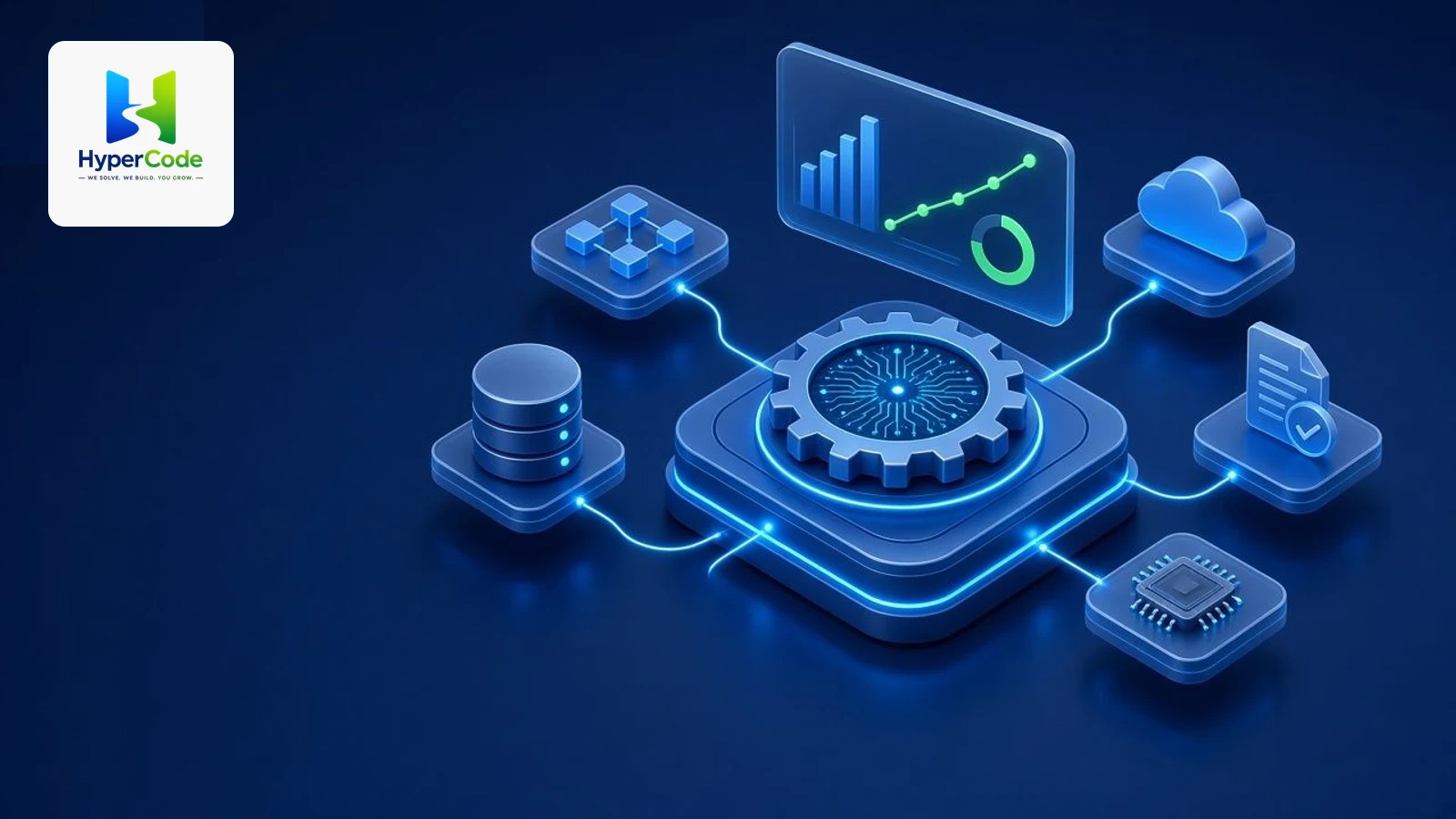
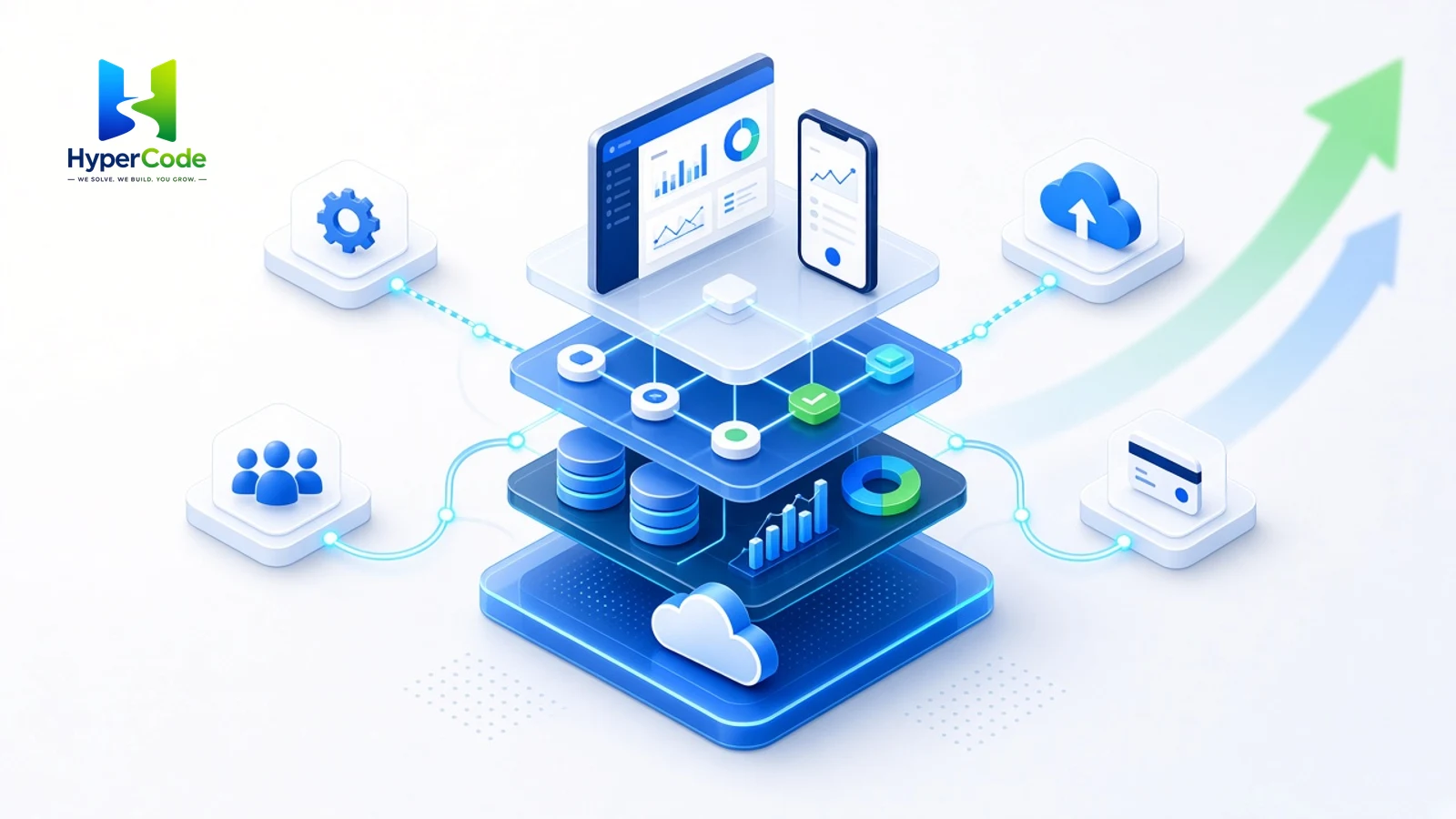
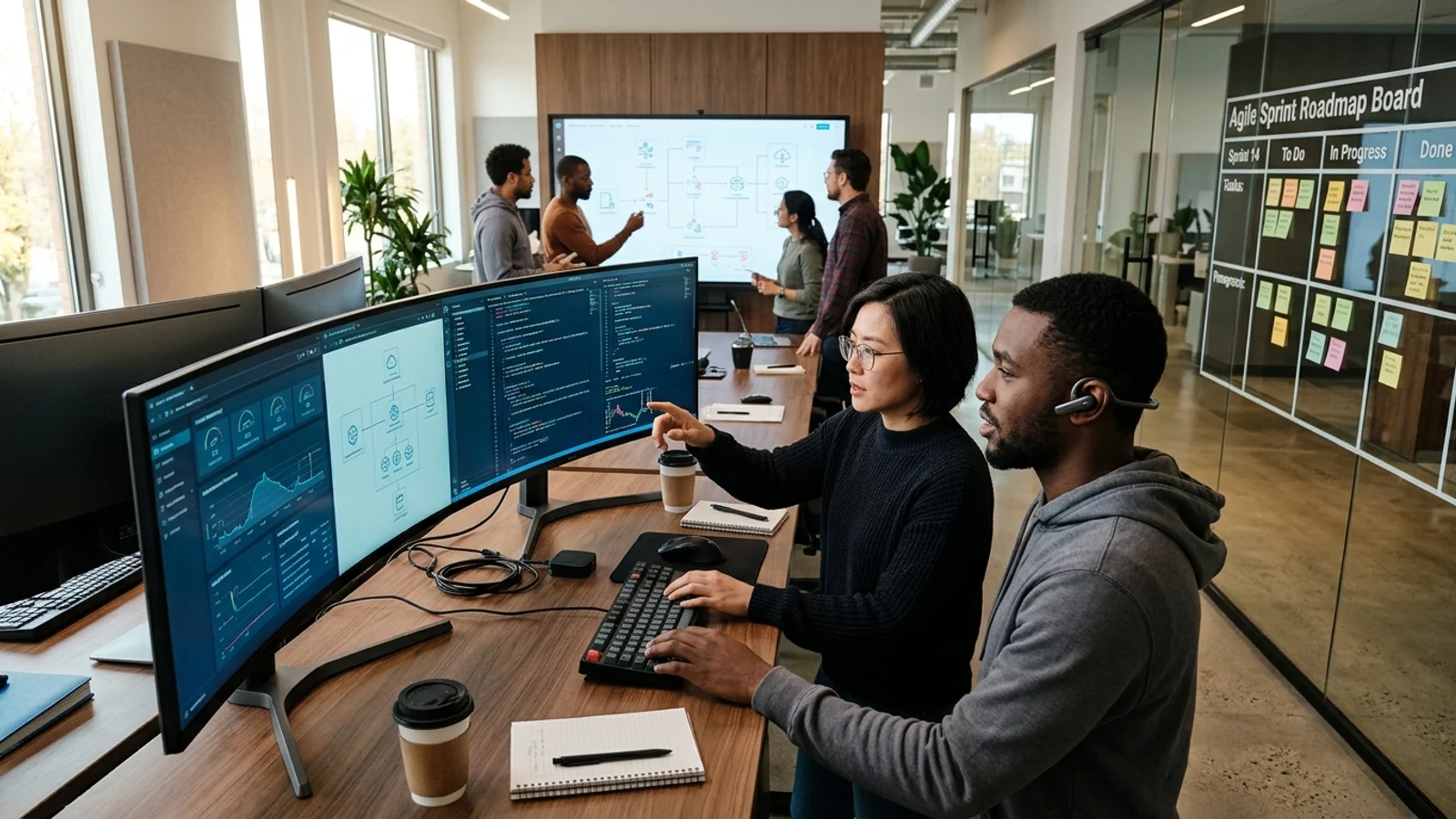
Modern cloud ERP enterprise architecture diagram showing a central data core connecting finance, supply chain, manufacturing, and analytics modules.
Volver a Artículos

Compartir Artículo

1. Executive Introduction: The Digital Central Nervous System

Picture an enterprise where your e-commerce checkout registers a sudden flash sale of 10,000 units. Within fractions of a second, automated warehouse systems allocate stock, procurement APIs notify raw-material suppliers across three continents, accounts receivable forecasts cash flow in real time, and logistics algorithms reserve freight carrier capacity—all without a single employee manually re-entering data into a spreadsheet.

That seamless operational synchronization is Enterprise Resource Planning (ERP). At its core, an ERP system functions as the digital central nervous system of modern commerce. It integrates core transactional functions—general ledger finance, human capital management, supply chain execution, material requirements planning (MRP), customer relationship management (CRM), and field logistics—into a single, authoritative, real-time source of truth.

Architectural Reality: An ERP system is not just business software; it is the definitive data fabric that prevents multi-million-dollar enterprises from fragmenting into disconnected operational islands.

Without a unified ERP platform, enterprises inevitably experience organizational friction: warehouse workers count pallets that the sales team has already promised, procurement orders materials that production lines cannot accept, and finance spends weeks every month manually reconciling ledger discrepancies across fragmented databases. An ERP system eliminates this friction by binding every department to an identical transactional state.

Operational Architecture

The Enterprise ERP Business Hub

How an integrated ERP core coordinates operational, financial, and strategic workflows across enterprise business domains:

General Ledger & Finance

Authoritative multi-entity accounting, automated reconciliations, cash forecasting, and GAAP/IFRS regulatory compliance.

Supply Chain & Inventory

Multi-echelon stock visibility, automated replenishment triggers, supplier EDI portals, and cold-chain monitoring.

Manufacturing & MRP

Multi-level Bills of Materials (BOM), work-order routings, machine capacity planning, and shop-floor IoT telemetry.

Human Capital (HCM)

Global payroll orchestration, international workforce compliance, time tracking, and employee self-service portals.

Commercial CRM & Orders

Omnichannel order capture, contract lifecycle management, dynamic price tiering, and quote-to-cash acceleration.

Executive BI & Analytics

Unified cross-functional data lakehouse, predictive scenario simulations, margin analytics, and autonomous AI agents.

Figure 1: Unified operational hub binding finance, supply chain, production, human capital, and customer channels into one authoritative data fabric.

Real-Time Coordination

How an ERP Connects the Enterprise

Accounts & Ledger
Warehouse & Logistics
Smart Production
Omnichannel Orders
ERP CORE
ACID Fabric

Continuous transactional telemetry flows bidirectionally between the central ERP database and distributed operational nodes.

2. Beyond the Textbook: What Does ERP Really Stand For?

The acronym ERP originated in the 1960s with the advent of Material Requirements Planning (MRP). Early MRP systems were designed specifically to calculate factory floor production schedules and raw inventory requirements using mainframe computers. By the late 1990s, the software expanded far beyond manufacturing into human resources, accounting, procurement, and distribution, prompting analyst firms to dub this comprehensive category Enterprise Resource Planning.

Today, modern cloud ERP is undergoing its most radical transformation yet. The paradigm has shifted from monolithic, slow-moving on-premises installations into composable, API-first microservices engineered with autonomous AI agents and cloud-native resilience.

At a technical level, an ERP system resolves the fundamental data integrity dilemma that plagues growing enterprises. Without an ERP, individual departments operate isolated databases:

  • Sales teams log closed deals in a standalone CRM using customer-specific discount tiers that accounting cannot verify.
  • Warehouse supervisors track bin locations and inventory balances in spreadsheets that fail to communicate with dispatch freight portals.
  • Finance directors struggle through 15-day month-end closes, manually untangling contradictory revenue figures, unposted accruals, and missing invoices.

An ERP system replaces these disconnected silos with a single transactional database that guarantees ACID compliance (Atomicity, Consistency, Isolation, and Durability). When a customer order is placed, inventory is locked, revenue schedules are generated, procurement triggers are evaluated, and pick-lists are routed instantaneously across the organization. Every stakeholder reads from and writes to the exact same authoritative data model.

2.1 The Evolutionary Shift: Monolithic vs. Composable ERP

Historically, enterprises deployed monolithic ERP suites that required multi-year rollouts and rigid client-server architectures. If an enterprise wanted to modify an invoicing workflow or integrate a new payment provider, custom code alterations risked breaking the entire platform during annual vendor upgrade cycles.

In contrast, modern enterprise engineering adopts composable cloud ERP architectures. By decoupling business capabilities into modular services connected via APIs and event streaming, organizations achieve operational agility without sacrificing transaction reliability.

Architecture Evolution

Legacy Monolithic ERP vs. Modern Composable Cloud ERP

Legacy Monolithic ERP Rigid & Slow
✕
Tightly Coupled Codebase: Upgrades take 12–18 months and routinely break proprietary customizations and internal scripts.
✕
Siloed Batch Processing: Data synchronizes overnight via brittle batch scripts, leaving leadership blind during intraday fluctuations.
✕
Vendor Lock-In: Massive licensing expenses, rigid feature sets, and expensive specialist consultants required for minor edits.
✕
Single Point of Failure: An unexpected database lock or server failure downs customer billing, warehouse fulfillment, and manufacturing.
Modern Composable Cloud ERP Modular & Elastic
✓
API-Driven Microservices: Swap, extend, or upgrade individual modules independently with minimal operational disruption.
✓
Real-Time Event Streaming: Event backbones (e.g., Kafka) propagate state changes across global operations with near-instantaneous low latency.
✓
Autonomous AI & Extensibility: Intelligent three-way matching, dynamic anomaly detection, and best-of-breed third-party SaaS integrations.
✓
Multi-Cloud & Elastic Scale: Containerized microservices running on AWS, Azure, or GCP with automated failover and enterprise high availability.

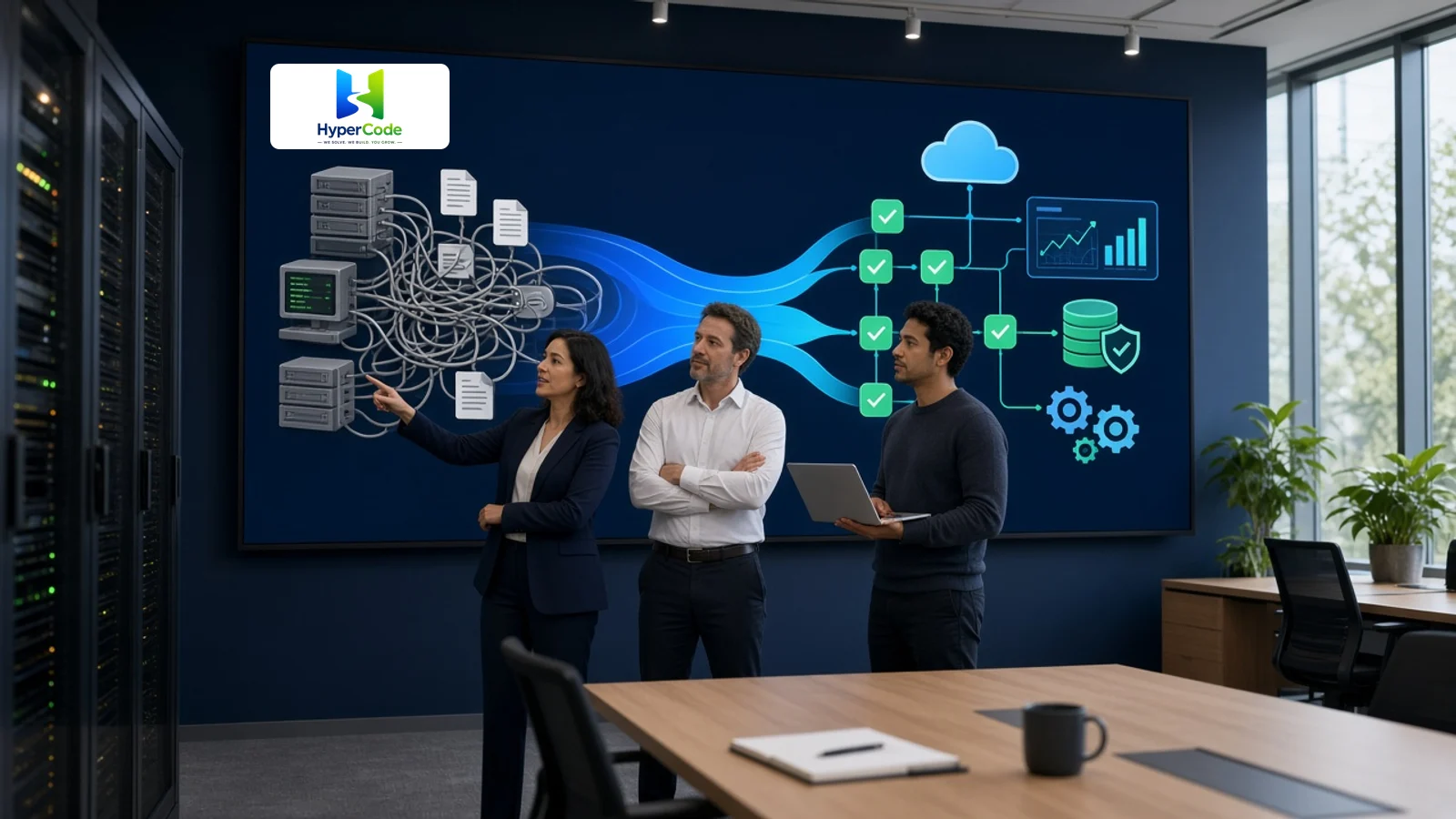
Figure 2: Transforming brittle legacy monoliths into composable, event-driven cloud ERP ecosystems.

3. The 4-Tier Modern Cloud ERP Architecture

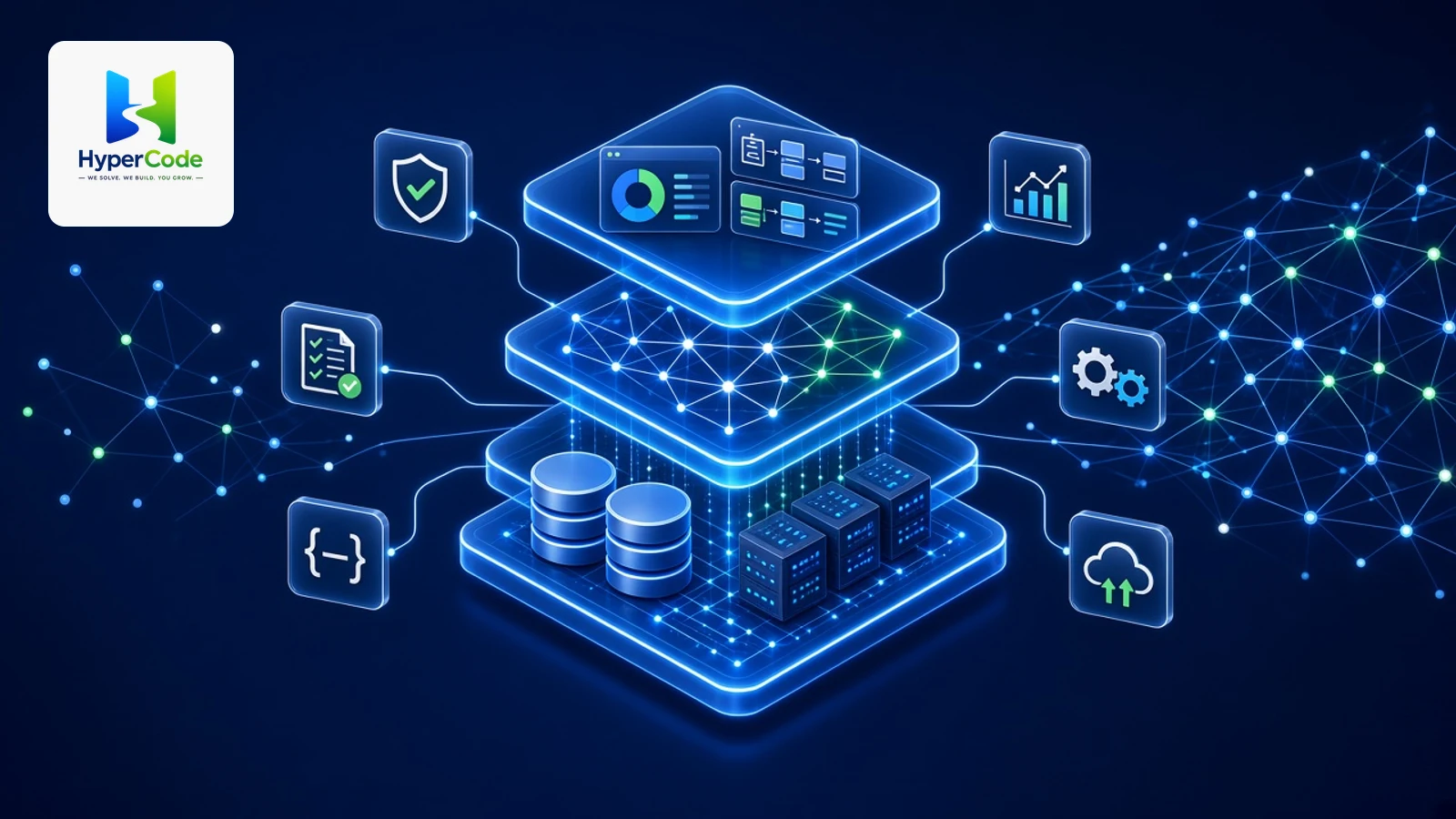
Engineered according to modern cloud-native standards, enterprise ERP is no longer a singular binary running on a dedicated server rack. Instead, high-velocity engineering organizations structure modern ERP as an elastic 4-tier composable ecosystem.

Technical Blueprint

The Modern Cloud ERP Architecture: 4-Tier Ecosystem

Tier 04: Presentation & AI Experience Layer Frontend & Consumption
Omnichannel Web Portals • Mobile Field Apps • Executive BI Dashboards • Conversational AI Co-Pilots

Role-based responsive interfaces built with React/Next.js, ruggedized mobile scanners for warehouse workers, and conversational copilot interfaces for executive scenario modeling.

Tier 03: Modular Business Logic & APIs Composable Business Core
Financial Ledger • Supply Chain & MRP • Inventory Control • Human Capital • REST/GraphQL Microservices

Decoupled domain-driven microservices encapsulating operational business rules, calculations, policy validation, and workflow state machines.

Tier 02: Event Streaming & Integration Fabric Data in Motion & Connectivity
Apache Kafka Streams • RabbitMQ Queues • Webhook Listeners • Strangler-Fig Facades • Enterprise ETL Pipelines

Asynchronous message brokers and event buses orchestrating event-driven state changes across legacy platforms, external APIs, banks, and third-party SaaS tools.

Tier 01: Unified Enterprise Data Lakehouse & Database Foundational Data of Record
Transactional ACID Relational DB (Single Source of Truth) • Vector Embeddings (AI/ML) • Immutable Audit Ledger

High-concurrency relational databases managing subledgers and inventory, combined with vector stores and distributed lakehouses for enterprise analytical modeling.

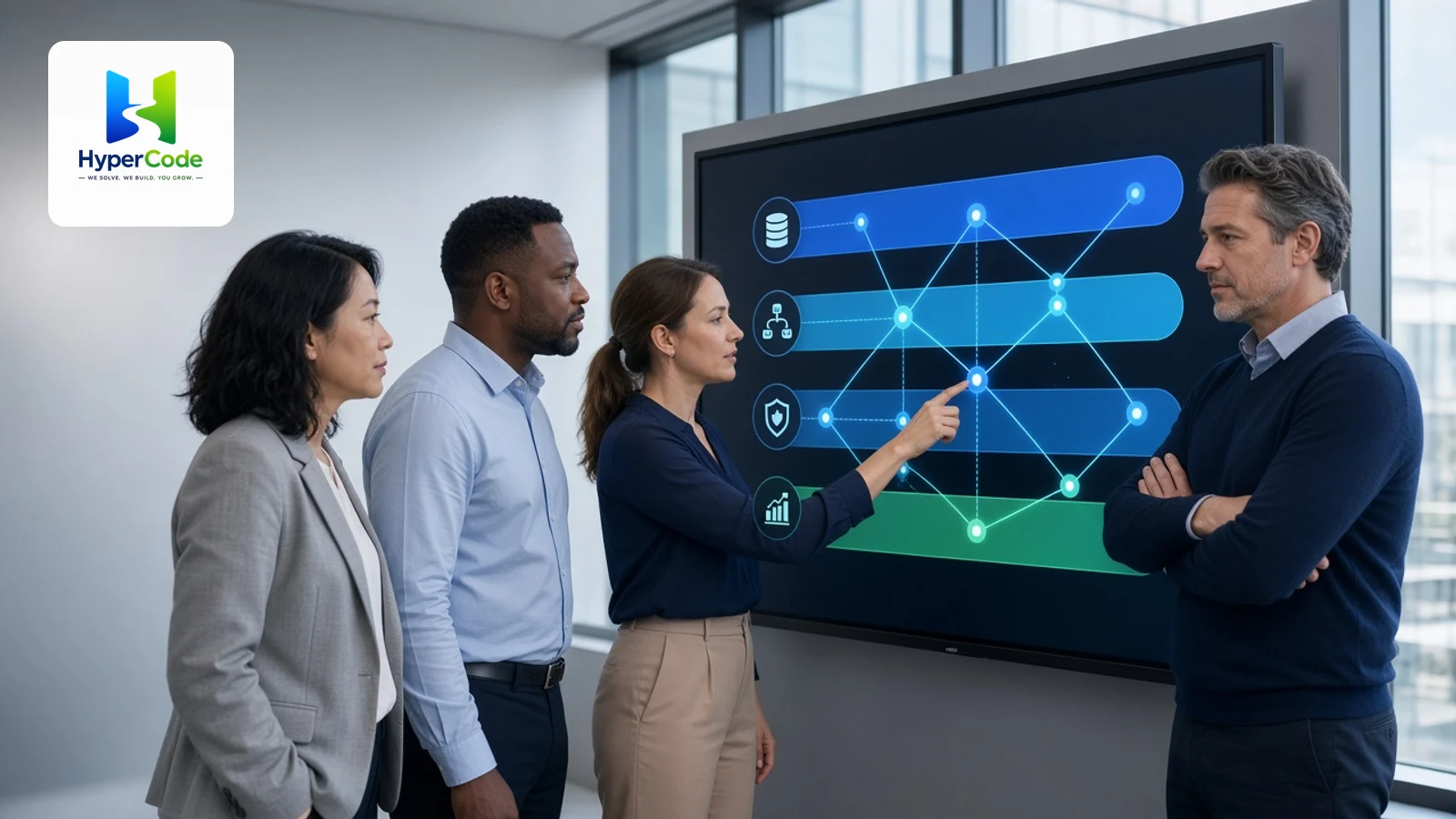
Figure 3: Modern composable cloud ERP architecture engineered for multi-cloud elasticity, high throughput, and seamless third-party integration.

3.1 Tier 01: Unified Enterprise Data Lakehouse & Transaction Core

At the foundation sits the authoritative transactional database of record. It pairs ACID-compliant relational databases (handling subledger postings, bank reconciliations, and inventory balances) with elastic vector stores and distributed lakehouses. This unified persistence layer eliminates reconciliation delays and provides the clean, normalized data pipeline required to train and ground enterprise AI models.

3.2 Tier 02: Event Streaming & The API Integration Fabric

Modern operations cannot survive on overnight batch scripts. The integration fabric utilizes distributed event backbones—such as Apache Kafka, RabbitMQ, and GraphQL gateways—to stream transactional events continuously. When an invoice clears or a pallet scans at a seaport, state changes propagate throughout every connected microservice with near-instantaneous low latency, keeping all system boundaries synchronized.

3.3 Tier 03: Modular Business Logic & Microservices Core

Rather than a monolithic ball of mud where finance and inventory are tangled into a single codebase, business logic is decoupled into domain-driven microservices. Each module (Finance, Supply Chain, Human Capital, CRM, Manufacturing) functions as an independent, scalable service. Organizations can modernize, update, or replace individual capabilities without risking system-wide downtime.

3.4 Tier 04: Omnichannel Presentation & AI Experience Layer

Gone are the grey, cryptic terminal windows of the 1990s. The modern presentation layer delivers responsive Next.js/React web consoles, native mobile apps for warehouse workers, real-time executive business intelligence dashboards, and conversational AI copilots that allow CFOs to run predictive scenario analyses in plain English.

These AI interfaces do not just regurgitate retrospective reports; they orchestrate actions across the underlying tiers. When an executive prompts the copilot with a complex scenario—such as simulating the cash flow impact of a 15% tariff hike across imported components—the system dynamically queries the lakehouse in Tier 01, calculates revised supply chain routes in Tier 03, and highlights operational trade-offs within seconds.

3.5 Role-Based Workspaces, Embedded Workflows & Explainable AI

Beyond conversational prompts, Tier 04 introduces proactive, context-aware user journeys tailored to specific operational roles:

  • Role-Based Responsive Workspaces: Floor supervisors receive real-time push alerts on ruggedized mobile tablets when machine telemetry flags anomalous vibration thresholds, while procurement leads view prioritized vendor scorecards and auto-drafted renegotiation terms.
  • Embedded Workflow Automation: Users execute multi-step business transactions directly within their daily productivity tools—such as approving purchase requisitions or reviewing contract variances—without navigating away from unified communication workspaces.
  • Explainable Decision Support: Whenever automated machine-learning models suggest dynamic pricing tiers, inventory rebalancing, or credit limit approvals, the interface displays an auditable rationale alongside key confidence intervals. This guarantees that leadership maintains full transparency over algorithmic recommendations rather than having to trust an opaque black box.

4. Core Modules Powering Modern Enterprise Operations

While modern ERP architectures are modular and customizable, high-performing enterprises deploy a core suite of integrated functional pillars to manage daily operational velocity.

Functional Pillars

Core Modules Powering Modern Enterprise Operations

Financial Management & General Ledger
Accounts Payable/Receivable, fixed assets, automated 3-way matching, multi-entity currency consolidation, and tax compliance.
Substantially accelerates monthly close cycles and automates balance reconciliation.
Supply Chain & Inventory (SCM)
Multi-echelon inventory tracking, automated reorder triggers, supplier portals, cold-chain telemetry, and warehouse slotting.
Sharply reduces stockouts while optimizing warehouse inventory carrying costs.
Manufacturing & Production (MRP)
Multi-level Bills of Materials (BOM), work-order routings, machine capacity scheduling, scrap tracking, and shop-floor IoT.
Optimizes machine utilization and prevents unplanned assembly line downtime.
Human Capital Management (HCM)
Global payroll processing, labor regulation compliance, time and attendance tracking, employee self-service, and benefits.
Streamlines cross-border compliance and automates personnel onboarding across jurisdictions.
Commercial CRM & Order Management
Omnichannel order capture, contract lifecycle management, dynamic customer pricing tiers, and returns management (RMA).
Accelerates quote-to-cash velocity and minimizes customer order fulfillment errors.

Figure 4: Core functional pillars of modern enterprise ERP, detailing baseline workflows and measurable business velocity improvements.

4.1 Financial Management & General Ledger

The financial management module serves as the regulatory anchor of the ERP. It maintains the general ledger, charts of accounts, accounts payable (AP), accounts receivable (AR), fixed asset lifecycles, and treasury management. In modern systems, this module automates three-way matching—verifying that purchase orders, receiving warehouse dockets, and vendor invoices match to the penny before releasing payments. Multi-entity organizations rely on automated currency translation and intercompany eliminations to consolidate global financials rapidly at fiscal period ends.

4.2 Supply Chain & Inventory Management (SCM)

Modern supply chain disruptions require granular, multi-echelon inventory visibility. The SCM module tracks raw materials, work-in-progress (WIP), and finished goods across distribution hubs, regional warehouses, and third-party logistics (3PL) partners. When warehouse scanners register inbound shipments, safety stock calculations recalculate buffer requirements dynamically based on historical lead times and seasonal demand forecasts.

4.3 Manufacturing & Production Planning (MRP)

For discrete and process manufacturers, the MRP module bridges sales demand with shop-floor execution. It translates finished goods forecasts into multi-level Bills of Materials (BOM), generates production work orders, and schedules machine run-times based on equipment availability and shift labor capacity. Connected sensors on equipment feed real-time telemetry into the ERP, flagging preventative maintenance needs before unexpected breakdowns halt assembly lines.

4.4 Human Capital Management (HCM)

Human Capital Management integrates workforce scheduling, global payroll, benefits administration, and tax compliance directly into the operational ledger. When factory floor workers log shift hours or remote engineers submit expense reports, HCM validates labor costs against specific project codes and production orders, giving management precise visibility into cost-of-goods-sold (COGS) labor components.

4.5 Commercial CRM & Omnichannel Order Management

While standalone CRM tools track sales leads, integrating CRM capabilities directly into the ERP fabric ensures seamless order execution. When a commercial account manager finalizes a master service agreement or complex quote, the ERP converts the opportunity into a binding sales order, verifies customer credit limits, allocates warehouse stock, and issues invoices without repetitive administrative handoffs.

As organizations accelerate digital transformation, traditional static software suites are being superseded by three game-changing architectural paradigms:

5.1 Autonomous Agentic AI with Guardrails

Next-generation ERP platforms do not merely store historical transaction logs; they deploy autonomous AI agents capable of proactive operational intervention. These agents detect anomalous billing patterns, reconcile bank statements against ledger entries, and dynamically adjust procurement buy-orders when supplier lead times increase.

Crucially, modern implementations incorporate human-in-the-loop governance. While routine micro-transactions (such as low-value replenishment purchases) execute automatically within strict policy thresholds, high-value expenditures and strategic supplier contracts surface explainable rationale cards requiring managerial approval.

5.2 Composable API Ecosystems & Best-of-Breed Services

Enterprises no longer lock themselves into monolithic single-vendor suites. Composable ERP enables organizations to plug in specialized cloud engines—such as Stripe for multi-currency payment processing, Snowflake for enterprise analytics, or Algolia for catalog search—via standardized REST and GraphQL endpoints. If a more capable service emerges, engineering teams can replace individual adapters without destabilizing the core ledger.

5.3 Edge & IoT Telemetry from the Physical World

From connected vibration sensors on assembly conveyor belts to GPS and temperature beacons on refrigerated shipping containers, modern ERP systems consume live telemetry directly from the physical environment. When temperature fluctuations threaten pharmaceutical cold-chain cargo, the ERP automatically flags affected lot numbers, initiates insurance claims, and routes replacement inventory before customers ever report a defect.

5.4 Operational Flow: End-to-End Event Orchestration

To understand how modern composable ERP orchestrates cross-departmental operations, trace the journey of an enterprise event from customer checkout through fulfillment and executive intelligence:

Event-Driven Flow

End-to-End Operational Event Lifecycle in Modern ERP

Step 01 • Capture Order Ingestion

Customer order placed via omnichannel API or B2B customer portal with real-time credit validation.

Step 02 • Stream Event Broker (Kafka)

Order event published to Kafka backbone, triggering simultaneous downstream microservice subscriptions.

Step 03 • Fulfill Inventory & MRP

Nearest regional warehouse reserves stock, generates robotic pick-lists, and triggers raw-material replenishment.

Step 04 • Settle Ledger & Intelligence

General ledger posts revenue, logistics reserves carrier dispatch, and executive dashboards update real-time margin metrics.

Figure 5: Asynchronous event pipeline transforming a single transaction into automated multi-departmental actions without manual intervention.

6. How HyperCode Accelerates Your ERP Modernization

Architecting, refactoring, or integrating an enterprise ERP is one of the highest-stakes engineering undertakings in software. Industry studies consistently show that failed ERP implementations stem not from software limitations, but from flawed architectural blueprints, bloated proprietary customizations, and integration partners that lack deep, hands-on systems engineering muscle.

HyperCode bridges the gap between executive business strategy and production software engineering:

  • Specialized ERP Engineering Squads: We deploy senior systems engineers, cloud architects, and data engineers vetted in distributed systems, SAP/Oracle cloud integrations, Salesforce connectivity, and custom microservice development.
  • Strangler-Fig Modernization: We help enterprises systematically decouple high-value business capabilities from legacy monoliths into clean, API-driven cloud services—minimizing business disruption through staged cutovers, event buffers, and canary deployments.
  • Velocity-Driven Integration Fabrics: We build resilient Apache Kafka event streams, GraphQL gateway layers, and automated CI/CD pipelines that allow your operational systems to scale elastically across hybrid and multi-cloud environments.

6.1 Strangler-Fig Modernization & Risk Mitigation

Rather than risking a high-stress "big bang" migration—where legacy systems are shut down overnight in favor of an untested replacement—HyperCode champions the Strangler Fig Pattern.

We implement an API gateway and event facade directly in front of your legacy mainframe or legacy ERP database. We then extract one discrete workflow at a time (such as warehouse inventory lookup or accounts payable invoice ingestion) into a cloud-native microservice.

Traffic is routed incrementally to the new microservice while maintaining bidirectional data synchronization with the legacy core. Over time, all mission-critical workflows are modernized safely, predictable ROI is realized within months rather than years, and the brittle legacy core is smoothly retired without business downtime.

If your organization is evaluating a modern cloud ERP deployment, refactoring legacy accounting software, or seeking dedicated engineering talent to connect CRM, e-commerce, and supply chain systems, explore our specialized ERP Software Development Services or consult our technical guide to ERP development benefits and agility.

Sobre el Autor

HyperCode

Enterprise Architecture & Technology Consulting

Consultor en HyperCode especializado en soluciones en la nube, sistemas de bases de datos avanzados y arquitecturas empresariales estratégicas.

Ready to Modernize Your Enterprise ERP Architecture?

HyperCode deploys dedicated systems architects and cloud engineering squads to design, decouple, and modernize mission-critical ERP platforms with minimal disruption.

Leer Artículo

Artículos Relacionados