


The Enterprise Guide to Digital Transformation Strategy

HyperCode

Enterprise IT Consulting & Architecture

October 21, 2026
Actualizado 30 de octubre de 2026
11 min read
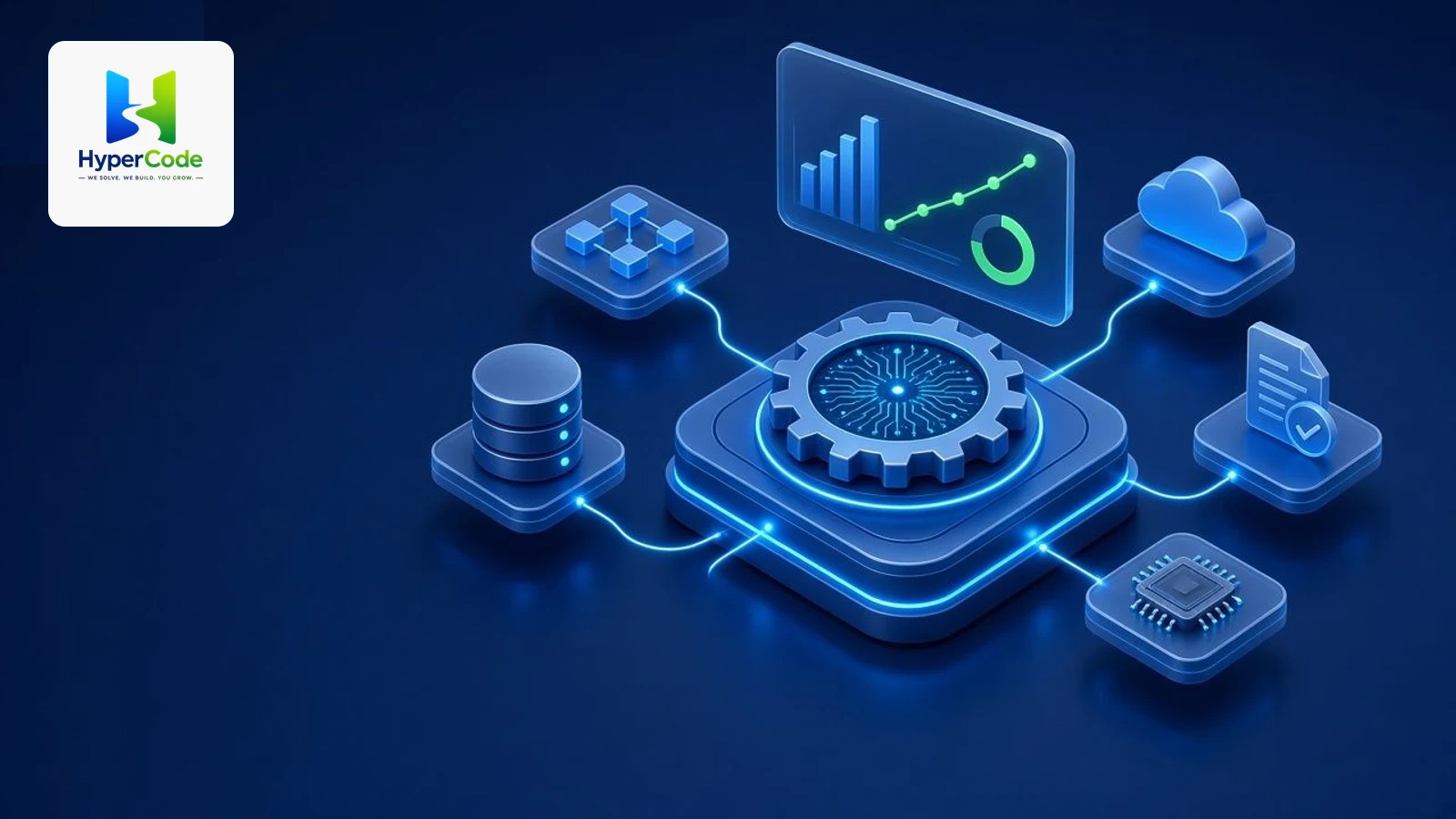
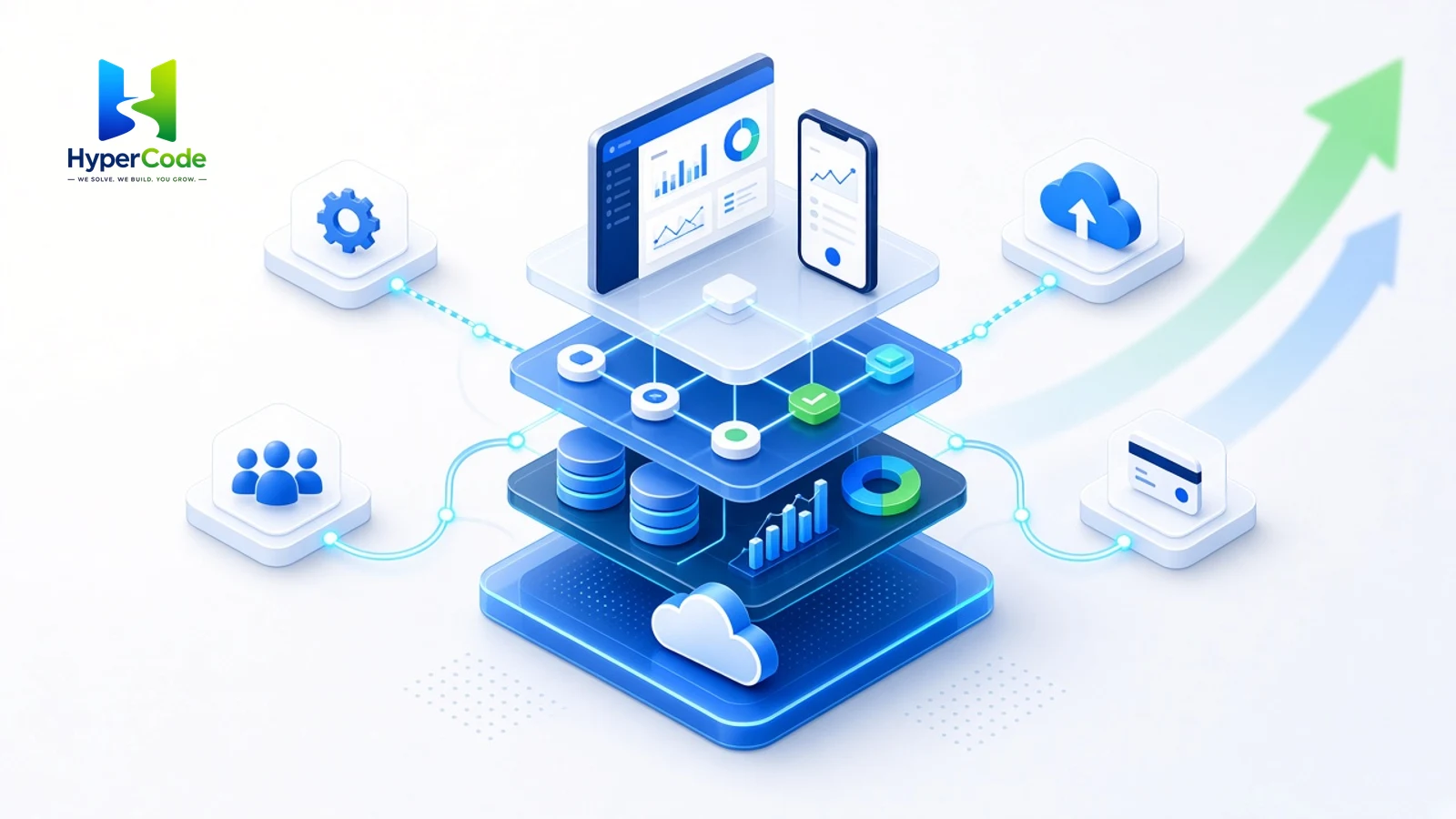
Enterprise digital transformation leadership team planning cloud, data, automation, security, applications, and measurable business outcomes.
Volver a Artículos

Compartir Artículo

A practical roadmap to build a smarter, faster, and more resilient business through strategic enterprise architecture, disciplined delivery, and measurable outcomes.

Executive Perspective

1. Executive Summary: From Ambition to Measurable Impact

Building an enterprise digital transformation strategy is no longer just an isolated technology initiative; it is an overarching business decision about how an organization serves customers, supports employees, uses information, and responds to continuous market change. Deploying cloud infrastructure, modern data pipelines, process automation, and intuitive applications can unlock unprecedented growth opportunities, but the real enterprise value emerges when technology deliberately improves business outcomes, simplifies processes, and builds long-term operational resilience.

Many organizations begin their digital journey with a single software tool purchase or an isolated cloud migration, only to discover later that the fundamental challenge lies in connecting disparate systems, aligning fragmented processes, and cultivating human adoption. A cloud platform may modernize infrastructure hosting, for example, but it will not automatically eliminate duplicate customer records, streamline multi-tiered managerial approvals, or resolve unclear data ownership across departments. Transformation succeeds when technical choices are strictly tied to clear business outcomes.

The Central Idea

Digital transformation is not about adopting technology for its own sake. It is about creating measurable, sustainable value for the business and its customers.

Professional enterprise IT consulting helps connect that strategic ambition to production execution. It brings disciplined structure to discovery, architecture, implementation, and measurement—so executive leaders understand what should change first, why it matters, and how progress will be evaluated.

Core Definition

2. What Digital Transformation Really Means

At its core, digital transformation is the deliberate use of technology to improve business operations, customer experiences, decision-making, and organizational adaptability. Rather than a superficial cosmetic redesign, an effective transformation strategy orchestrates cloud and infrastructure modernization, enterprise data platforms, intelligent process automation, responsive custom application engineering, and resilient cybersecurity architecture.

True transformation is vastly broader than digitizing a paper form or moving a legacy application to the cloud. Transformation asks a fundamental question: Can the organization deliver products and services more effectively because its technology, processes, and teams work better together?

Enduring transformation succeeds only when four mutually reinforcing dimensions evolve in lockstep:

Enterprise Framework

Visual 1: The Four Connected Dimensions of Digital Transformation

1. People

Give employees the skills, clarity, modern tools, and organizational support needed to adopt and sustain new ways of working with confidence.

2. Process

Simplify cross-functional hand-offs, remove unnecessary manual friction, eliminate redundant steps, and establish clear accountability across teams.

3. Technology

Modernize platforms and integrate disparate systems so they are secure, reliable, composable, scalable, and genuinely fit for purpose.

4. Business Value

Explicitly connect every technology investment to tangible outcomes such as service quality, operational efficiency, resilience, or customer satisfaction.

Figure 1: Digital transformation creates sustainable advantage only when People, Process, Technology, and Business Value progress together.

Strategic Advisory

3. Why Enterprise IT Consulting Matters

Large transformation programs often span multiple departments, legacy systems, complex data environments, third-party software vendors, and strict security compliance mandates. Without a shared, coherent plan, individual teams can make locally sensible decisions that inadvertently create cross-system integration bottlenecks or duplicate capital investments elsewhere in the enterprise.

Engaging a specialized digital transformation consulting partner helps assess the current environment, identify hidden system dependencies, define a scalable target architecture, sequence the work logically, and establish practical governance. The objective is never to produce an abstract theoretical strategy binder that sits on a shelf; it is to help the organization make sound trade-off decisions and move swiftly from planning into production delivery:

Strategic Discovery

Clarify business priorities, operational constraints, regulatory risks, and measurable success criteria before selecting technical tooling.

Technology Assessment

Evaluate existing applications, data flows, infrastructure bottlenecks, security gaps, and technical debt across the enterprise footprint.

Solution Architecture

Design a target state that optimizes modular integration, enterprise security, elastic scale, maintainability, and cloud cost efficiency.

Implementation Support

Coordinate agile phased delivery, automated testing, change management, operational cutovers, and organizational readiness.

Continuous Improvement

Review production outcomes, resolve emerging operational issues, analyze telemetry, and refine the roadmap as business needs evolve.

Knowledge Enablement

Document architectural standards, runbooks, and automation tools so internal engineering teams sustain and scale the solution independently.

Start with the Business Problem

Before choosing a software platform or vendor, define the problem in plain language. Is the business trying to reduce order-processing time, improve access to reliable data, make customer service more responsive, or reduce operational risk? A clear problem statement makes it easier to compare options and avoid spending capital on technology that does not address the real operational constraint.

Strategic Foundations

4. Five Pillars of a Successful Enterprise Digital Transformation Strategy

Modern enterprise architecture must balance immediate delivery velocity with long-term adaptability. Successful organizations structure their efforts across five core functional pillars:

Architecture Blueprint

Visual 2: Five Pillars of a Successful Enterprise Strategy

1. Cloud & Infra

Cloud and infrastructure modernization: elastic compute, container orchestration, and automated infrastructure as code.

2. Data Platforms

Data-driven decision-making: unified enterprise data governance, trusted lakehouses, and real-time business intelligence.

3. Automation

Process automation and operational efficiency: streamlining high-volume workflows, reducing manual rework, and automating CI/CD.

4. Customer Exp.

Customer experience and product-led delivery: responsive web and mobile channels guided by observed user feedback.

5. Resilience

Security, compliance, and resilience: zero-trust identity, least-privilege access, immutable backups, and disaster recovery.

Figure 2: The five interconnected pillars that support modern enterprise agility, data integrity, and operational resilience.

Deep Dive into the Strategic Pillars

  • Cloud and Infrastructure Modernization: Cloud adoption can improve flexibility and access to managed platform services, but migration must be guided by workload needs, security requirements, total cost of ownership, and operational readiness. Some systems may be moved quickly using containerized rehosting; complex legacy engines require refactoring or a staged transition. A clear plan explicitly accounts for dependencies, recovery arrangements, performance requirements, and ownership after launch.
  • Data-Driven Decision-Making: Reliable decisions depend on trustworthy data. Organizations should address data quality, access controls, governance, and shared canonical definitions before expanding dashboards or artificial intelligence initiatives. Partnering with a dedicated data analytics services team establishes a well-designed data foundation, helping cross-functional teams compare performance consistently and act on information with greater confidence.
  • Process Automation and Operational Efficiency: Strategic automation can reduce repetitive manual work and improve consistency, particularly across high-volume transactions. The best automation candidates have clear deterministic rules, measurable pain points, and manageable exceptions. Crucially, teams must review and simplify the business process before automating it; otherwise, technology may simply make an inefficient workflow run faster. Discover how our business process automation services streamline mission-critical operations.
  • Customer Experience and Product-Led Delivery: Digital channels, responsive applications, and connected services make customer interactions simpler and more intuitive. Continuous user feedback helps product and engineering teams prioritize enhancements based on observed needs rather than internal speculation. Product management, design, engineering, and customer operations must share joint ownership of the end-to-end customer experience.
  • Security, Compliance, and Resilience: Security must be part of the architecture from the very beginning. Identity controls, least-privilege access, continuous telemetry monitoring, secure development lifecycles (DevSecOps), automated backups, and incident-response plans help protect systems as they scale. Compliance requirements must be mapped rigorously to the organization’s industry and operating jurisdictions.

Execution Roadmap

5. A Practical Enterprise Digital Transformation Roadmap

A phased roadmap gives leadership a pragmatic way to move forward without attempting a risky, organization-wide change all at once. Each phase produces a clear output, an evidence checkpoint, and a formal decision gate:

Phased Execution Plan

Visual 3: The Enterprise Digital Transformation Phased Roadmap

Phase 01

Assess

Map systems, workflows, data architectures, compliance risks, and core friction points across departments.

Evidence of Progress: Baseline metrics, system dependency map, prioritized operational gaps.
Phase 02

Plan

Set target business outcomes, solution architecture, investment budget, executive owners, and milestone gates.

Evidence of Progress: Approved technical roadmap and measurable success criteria.
Phase 03

Implement

Deliver in manageable agile phases; test thoroughly, enforce security controls, and actively communicate changes.

Evidence of Progress: Working production releases, verified telemetry, and direct user feedback.
Phase 04

Optimize

Monitor real-world performance, cloud compute costs, system reliability, user adoption rates, and edge cases.

Evidence of Progress: Operational improvements backed by empirical system evidence.
Phase 05

Scale

Expand proven modernization patterns, establish modular design standards, and strengthen internal team capability.

Evidence of Progress: Reusable architectural standards, trained teams, and sustainable ownership.

Figure 3: A disciplined five-stage transformation roadmap that validates assumptions with working software and scales sustainable capability.

A phased approach does not mean moving slowly. It means reducing uncertainty early, validating architectural assumptions with real production workloads, and scaling what proves useful. Smaller, incremental releases also make it easier to learn from users and adjust before a minor misunderstanding turns into an expensive mistake.

5.1 Digital Transformation Governance That Keeps the Roadmap Practical

Practical governance ensures accountability without slowing delivery. Assign an accountable business owner, a technical lead, and clear decision rights. Review progress regularly, track cross-system dependencies, and escalate operational risks while there is still ample time to respond.

Above all, governance should make decisions easier—not add unnecessary layers of bureaucratic approval that stall project velocity and frustrate engineering squads.

Transformation Dynamics

6. Dynamic Flow: From Business Challenge to Transformation Value

The journey from operational stagnation to an adaptable digital enterprise requires a coherent continuum: from identifying the primary constraint through architecture, delivery, measurement, and scaling. Observe how modern organizations orchestrate this journey:

Interactive System Model

Animation: From Business Challenge to Transformation Value

01

Business Problem

Identify the core operational constraint.

02

Assess

Map systems, data flows, and dependencies.

03

Plan

Formulate target architecture and KPIs.

04

Modernize

Refactor legacy components into cloud services.

05

Connect

Integrate APIs, event brokers, and data.

06

Automate

Streamline workflows and CI/CD pipelines.

07

Measure

Evaluate real production KPIs against baseline.

08

Scale

Institutionalize standards across the enterprise.

Figure 4: Continuous transformation flow connecting business constraints to scalable, sustainable enterprise value.

Industry Realities

7. Practical Digital Transformation Applications Across Industries

The specific technology configurations differ by industry, but the underlying aim is identical: improve a concrete business outcome while making core enterprise systems more reliable and adaptable. Consider how modern organizations apply these principles across four representative sectors:

Healthcare

Connected clinical systems and unified data workflows support smoother administration, more reliable information access, and improved patient care coordination. Strict patient privacy, role-based access control, and regulatory compliance requirements (such as HIPAA) shape the architecture from the start.

Retail & E-commerce

Integrated inventory, order, and customer relationship systems reduce fragmented records and support a consistent shopping experience across physical and online channels. Real-time analytics help merchandising teams understand consumer demand, manage warehouse stock, and improve fulfillment planning.

Finance & Banking

Modern cloud platforms support stronger real-time transaction monitoring, smoother digital banking services, and more efficient internal underwriting processes. Enterprise security, rigorous auditability, resilience under peak market volume, and financial regulatory compliance remain essential design pillars.

Manufacturing & Logistics

Connected operational technology (OT) data improves visibility into factory machinery, supply chains, and freight delivery status. Bi-directional integration between enterprise ERP applications and shop-floor IoT systems helps operations managers make proactive scheduling decisions with a complete view of production.

Accountability & Metrics

8. How to Measure Digital Transformation Business Impact

Transformation should be measured through tangible business outcomes, not the number of software tools deployed or the sheer volume of technical activity completed. Executive teams should choose a small set of indicators that reflect the exact problem the initiative is intended to solve, recording an empirical baseline before implementation begins:

Performance Scorecard

Visual 4: Digital Transformation Business Impact Scorecard

Category Primary Outcome Indicators Balanced Quality Safeguard
Operational Efficiency Process cycle time, manual effort hours, error rates, cost per transaction. Error rates and rework frequency must decrease alongside velocity gains.
Customer Experience Customer satisfaction (CSAT), issue resolution time, abandonment rate, self-service adoption. Application uptime, response latency, and accessibility standards must be preserved.
Delivery Performance Software release frequency, lead time for changes, defect trends, mean time to recovery (MTTR). Change failure rates must remain low as deployment velocity increases.
Data & Decision Quality Data freshness, reconciliation discrepancies, time required to answer key business questions. Data governance compliance and anomaly detection alerts.
Risk & Resilience Vulnerability remediation time, disaster recovery readiness, access-review completion, uptime. Full operational availability of critical business services under peak load.

Figure 5: Measuring digital transformation through paired metrics ensures that speed and efficiency improvements never compromise system stability or customer satisfaction.

Metrics need context. A faster software release is not a win if defects rise sharply; a lower monthly cloud bill is not a success if system reliability suffers. Pair speed and cost measures with quality, security, user adoption, and customer outcomes.

Measure What Matters

Agree on the baseline, target milestone, named owner, and review cadence before work begins. This makes progress visible across departments and helps teams course-correct early.

Risk Mitigation

9. Common Digital Transformation Challenges — and How to Avoid Them

Even well-funded transformation initiatives encounter predictable organizational and technical headwinds. Recognizing these challenges in advance enables leaders to formulate pragmatic countermeasures:

1. Treating Technology as the Strategy

The Challenge: Procuring a modern cloud platform or enterprise SaaS suite with the mistaken belief that software alone will fix inefficient workflows.
The Solution: Pair technical implementation with process redesign, comprehensive user training, clear communication, and unambiguous business ownership.

2. Trying to Change Everything at Once

The Challenge: An enormous, all-at-once overhaul creates severe operational risk, exhausts internal teams, and delays value realization.
The Solution: Prioritize work by business value, dependency constraints, and operational readiness; deliver in vertical stages with clear rollback plans.

3. Underestimating Legacy Constraints

The Challenge: Legacy applications often contain undocumented business rules, database triggers, or implicit dependencies discovered mid-project.
The Solution: Map critical data flows during discovery, involve frontline employees who understand daily operations, and prototype integration contracts before committing to a broad rollout.

4. Ignoring Security & Change Adoption

The Challenge: Leaving cybersecurity sign-offs and employee training to the final weeks, resulting in delayed go-lives or user resistance.
The Solution: Include security and risk owners from day one; train affected teams and create active feedback channels so concerns are addressed while architecture remains flexible.

Partner Evaluation

10. How to Choose an Enterprise Digital Transformation Consulting Partner

The right consulting partner combines technical software depth with a practical understanding of how the business operates. Look for a team that can explain trade-offs clearly, work alongside internal stakeholders, and connect architectural recommendations to achievable business outcomes:

  • Business Alignment: Asks what commercial success looks like and validates underlying business constraints before proposing specific software platforms or vendors.
  • Practical Delivery Experience: Understands hands-on implementation, automated testing, cloud migration, and operational handover—not only high-level strategy presentations.
  • Architecture and Integration Capability: Considers how distributed systems, databases, APIs, and business processes work together reliably.
  • Security-Minded Execution: Seamlessly incorporates identity management, data privacy, compliance, and disaster recovery into baseline design decisions.
  • Knowledge Transfer: Documents architectural standards, develops runbooks, and trains internal teams so the organization sustains the solution independently.
  • Transparent Measurement: Agrees on milestones, operational risks, and empirical outcome indicators from the start, avoiding ambiguous scope and vendor lock-in.

During partner evaluation, ask the team to explain how they would approach your highest-priority problem, what assumptions they would validate first, and how they would measure success. A truly capable partner will make the path clearer, not hide uncertainty behind industry buzzwords.

HyperCode Model

11. How HyperCode Supports the Digital Transformation Journey

HyperCode works across technology consulting and software engineering capabilities—including cloud modernization, unified data architecture, custom application development, and specialized technical staff augmentation. For organizations planning a transformation, our starting point is a practical discussion about current constraints, desired business outcomes, delivery capacity, and the specific initiatives that will create the most immediate value.

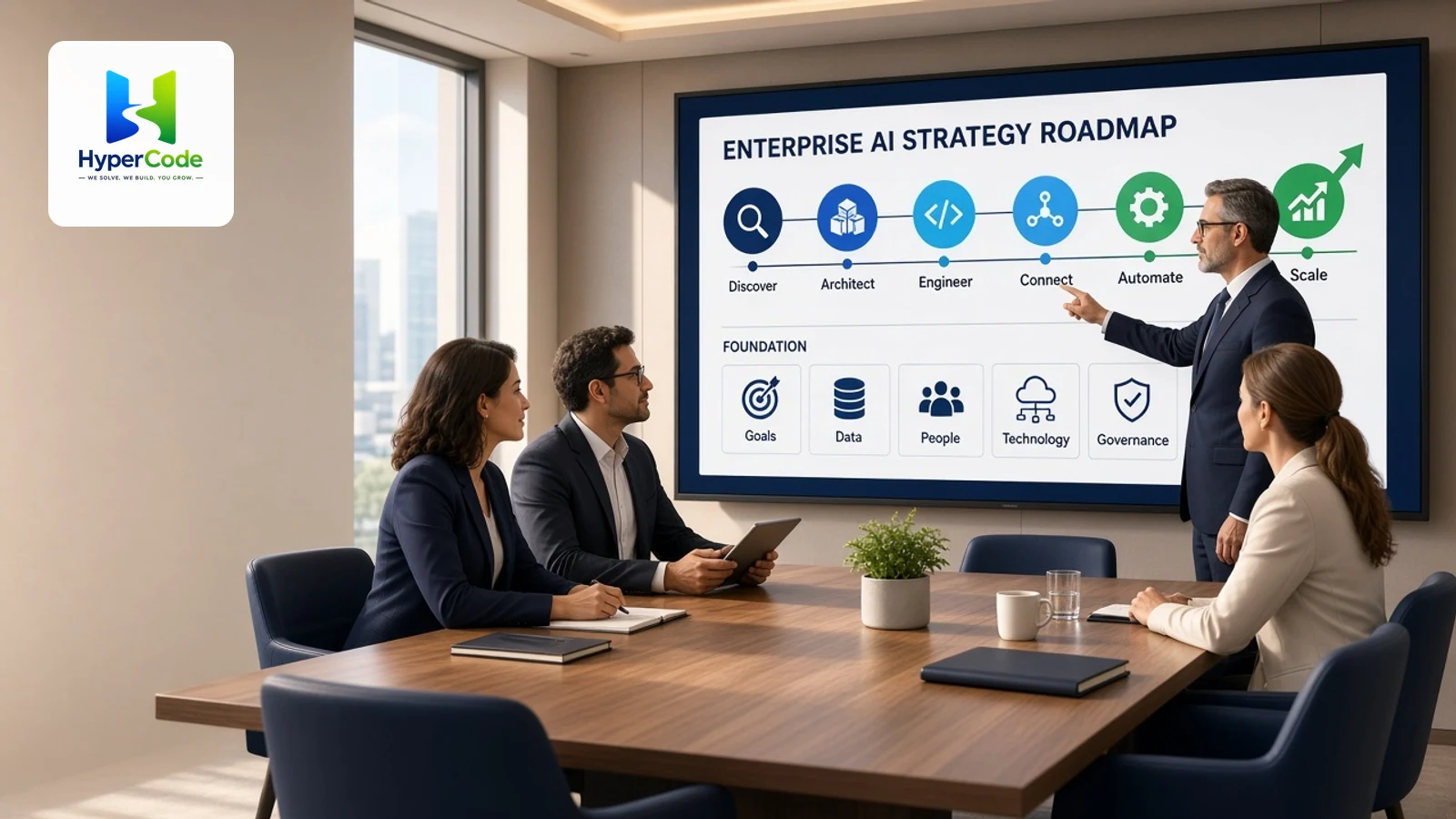
We reject one-size-fits-all transformation templates. Our approach is tailored to your organization’s operational realities: a focused architectural assessment identifies high-value priorities, followed by a staged roadmap connecting solution architecture, implementation, and continuous operational improvement:

Engineering Delivery Model

Visual 5: The HyperCode Transformation Journey

1. Discover

Assess legacy constraints, data flows, and high-impact business outcomes.

2. Architect

Design modular cloud blueprints, API topologies, and security controls.

3. Engineer

Deploy senior engineering pods to build modern services and applications.

4. Connect

Integrate data pipelines, ERP/CRM engines, and third-party SaaS tools.

5. Automate

Eliminate manual hand-offs with intelligent workflow automation.

6. Scale

Enable internal teams with runbooks, documentation, and continuous support.

Figure 6: HyperCode’s six-stage delivery model: pairing executive strategic clarity with hands-on senior engineering excellence.

Strategic Horizon

12. Take the Next Step: Build Smarter & Grow with Confidence

Digital transformation is fundamentally a journey of connected decisions. The strongest enterprise strategies combine clear business priorities, sound architecture, secure implementation, and people who can adopt and sustain new ways of working. They also leave room to learn: measuring production outcomes, listening to user feedback, and refining the roadmap as the organization's needs change.

Enterprise IT consulting turns a broad ambition into an actionable plan—one that clarifies what to modernize, how to sequence the work, and how to demonstrate verified progress. With the right priorities and the right delivery support, transformation becomes less about chasing short-lived trends and more about building an organization that can adapt with confidence.

BUILD SMARTER. OPERATE BETTER. GROW WITH CONFIDENCE.

Explore Related HyperCode Strategic Capabilities

Ready to explore specific modernization pathways? Discover how HyperCode helps technology leaders plan, modernize, and scale:

Enterprise FAQs

Frequently Asked Questions (FAQ)

Explore detailed answers to the most common strategic, architectural, and operational questions surrounding enterprise digital transformation:

Sobre el Autor

HyperCode

Enterprise IT Consulting & Architecture

Consultor en HyperCode especializado en soluciones en la nube, sistemas de bases de datos avanzados y arquitecturas empresariales estratégicas.

Ready to Accelerate Your Enterprise Digital Transformation?

HyperCode partners with technology leaders to design scalable target architectures, de-risk legacy modernization, and deploy elite engineering pods that deliver measurable business outcomes.

Leer Artículo

Artículos Relacionados